Last updated November 18, 2026
New Detached ADU Maintenance Schedule: What to Do and When
A new detached ADU in North Las Vegas will see roof surface temperatures above 170°F in July. That single number changes almost everything about how you maintain the building. Shingle granules wear away faster. Sealant beads around windows and vents cure and crack years ahead of schedule. Standard manufacturer timelines for roofing and exterior sealants are written for temperate climates, and in the Mojave they run 30-40% short. What follows is a maintenance calendar built for the desert: month by month, component by component, with the inspection intervals that actually apply to a detached ADU in North Las Vegas rather than a national template borrowed from a wetter place.
Quick Answer
A detached ADU in North Las Vegas needs three things on an annual cycle: a full exterior envelope inspection each spring (sealants, stucco cracks, roof penetrations), HVAC servicing twice a year (early April and late September), and a slab and drainage check before and after the summer monsoon season. Those three routines catch the failures desert heat and caliche soil cause before they become repairs. Everything else is a lighter, rotating schedule described below.
Table of Contents
- Why a North Las Vegas ADU Ages Differently
- The Three Envelope Components That Need Annual Attention
- The Month-by-Month Maintenance Calendar
- HVAC Intervals for a Small Detached Unit
- Monitoring Slab Movement on Caliche-Rich Lots
- Building a Maintenance Photo Record for Insurers and Buyers
- Common Mistakes to Avoid
- Frequently Asked Questions
Why a North Las Vegas ADU Ages Differently
Most ADU maintenance guides assume four seasons and moderate humidity. North Las Vegas doesn’t work that way. Summer surface temperatures on a dark roof can push past 170°F. The air is dry enough that wood framing shrinks and stucco cures hard, then a monsoon afternoon drops an inch of rain in forty minutes. That cycle of extreme heat and sudden moisture does more damage to exterior materials than steady weather ever does.
Then there’s the ground. Large parts of the North Las Vegas valley sit on caliche, a calcium-carbonate layer that behaves like soft concrete. It expands and contracts with moisture. A detached ADU built on a properly engineered slab handles normal seasonal movement, but caliche heave under a poorly drained foundation is one of the reasons we see cracked slabs and sticking doors on older backyard structures across the valley.
Add the local market context: many North Las Vegas homeowners built their ADU as a long-term rental asset, not a hobby space. That means maintenance isn’t optional upkeep. It’s the thing that protects the rent, the insurance policy, and resale value. On the properties we’ve designed and permitted through our New Detached ADU service, owners tell us the same thing: they want a schedule they can hand to a tenant or a property manager, not a vague list of tips.
The Three Envelope Components That Need Annual Attention
In cooler, wetter climates, exterior envelope inspections run every three to five years. In North Las Vegas, three specific components need eyes on them every single year. This is the single biggest difference between a desert maintenance schedule and a generic one.
1. Sealants
Elastomeric sealant around windows, doors, utility penetrations, and the roof-to-wall junction is the first thing desert UV destroys. The sun cooks the surface, the sealant loses flexibility, and hairline cracks open. Once water gets behind a bead of failed sealant, the repair is no longer a tube of caulk. Check every bead each spring and touch up anything that has lost adhesion or turned chalky.
2. Stucco cracks
Stucco on a detached ADU in North Las Vegas expands and contracts daily. Hairline cracks under 1/16 inch are normal and cosmetic. Cracks wider than that, or cracks that reappear in the same spot after patching, are telling you something about movement behind the wall. Note them, photograph them, and track whether they grow.
3. Roof penetrations
Vents, skylights, and any roof-mounted equipment boot or flashing are where roofs leak first. UV degrades the rubber boots around plumbing vents within a decade in this climate. A five-minute look at every penetration each spring prevents the interior ceiling stain that shows up in August.
- Spring: sealants, stucco, roof penetrations – full exterior walk-around
- Summer: watch only, no patch work in extreme heat (sealants won’t cure correctly above roughly 95°F)
- Fall: repeat the walk-around after monsoon season, compare notes to spring
- Winter: repair window – the cool, dry months are when patching and re-sealing actually holds
The Month-by-Month Maintenance Calendar
Here is the calendar we recommend to North Las Vegas ADU owners, built around the local climate rather than a national template. If you rent the unit, hand this to your tenant or property manager so nothing slips.
- January: Interior inspection. Check for condensation at windows, test smoke and CO detectors, look at ceilings for any winter staining. Cool weather is also the best window to re-seal exterior joints that failed the previous year.
- February: Do any stucco patching and exterior paint touch-ups. Paint and patch cure well in the mild temperatures. Photograph everything you fixed.
- March: Full exterior envelope inspection (sealants, stucco, roof penetrations). Clear roof debris and check gutters and downspouts before the heat arrives. Service the irrigation if the ADU has landscaping.
- April: HVAC pre-summer service. Change filters, have the system checked before the first hard heat. Clean condenser coils, which collect desert dust fast.
- May: Check window screens, door sweeps, and weatherstripping before cooling season peaks. Verify drainage away from the slab, especially if your lot has caliche.
- June: Mid-season filter change. Walk the exterior at dusk when surface temperatures drop and you can spot cracks or sealant failure the midday glare hides.
- July: No exterior patching. Heat makes most sealants and paints fail to cure. Check HVAC operation and filter again; a small unit runs near-continuous cooling this month.
- August: Same as July. Watch for monsoon-season water intrusion after any heavy rain event and photograph any interior staining.
- September: Post-summer HVAC service. This is when you catch the wear that continuous cooling caused. Check the roof for lifted shingles or flashing damage from monsoon wind.
- October: Fall envelope inspection. Compare to your March photos. Note any cracks that grew or sealant that failed over the summer and schedule the repair.
- November: Slab and drainage check after the hot season. Look for new cracks in the slab edge, sticking doors, or gaps at the base of walls. Repair window opens for exterior work.
- December: Interior maintenance month: caulk interior trim, check under sinks, test detectors, review the year’s photo record and file it with your insurance documents.
HVAC Intervals for a Small Detached Unit
A detached ADU has a small envelope and a small HVAC system, and in North Las Vegas that system runs near-continuous cooling from May through September. A unit that runs almost every hour of the day accumulates dust and wear far faster than a house system that cycles on and off. The standard “once a year” filter advice doesn’t apply here.
- Filters: check monthly and change every 30-60 days during cooling season. Desert dust loads a filter quickly, and a clogged filter makes a small system work harder in exactly the month it can least afford to.
- Coil cleaning: condenser coils need cleaning at least twice a season in this climate. Dust and cottonwood fluff pack the fins and cut efficiency.
- Professional service: twice a year, ideally April and September. The pre-summer visit catches problems before the unit has to run hard; the post-summer visit catches the wear that hard running caused.
- Refrigerant and electrical check: once a year at minimum. A small system running near-constant cooling will show refrigerant or capacitor problems earlier than a larger one.
If you’re still in the planning stage and haven’t built yet, the HVAC decisions get made during design. Our team at ADU Design & Permitting in North Las Vegas specifies equipment sized for the actual envelope, not a default unit pulled off a shelf, because oversizing a small ADU’s system in this climate shortens its life and hurts comfort.
Monitoring Slab Movement on Caliche-Rich Lots
Caliche is common across the North Las Vegas valley, and it’s the reason slab monitoring matters more here than in most of the country. Caliche expands and contracts with moisture, and a slab that isn’t correctly drained or engineered for it will move. Most of that movement is harmless. The skill is knowing when it isn’t.
Watch these indicators, and track them with dates and photos:
- New slab-edge cracks that appear and widen over weeks rather than days.
- Doors and windows that stick or won’t latch and weren’t doing that before.
- Gaps opening at the base of walls, where the stucco meets the slab or the stem wall.
- Diagonal cracks radiating from door and window corners on interior drywall.
- Tiles that crack or lift in a straight line across the floor.
Hairline slab cracks are normal. The threshold that should prompt a structural consultation is movement that accelerates: a crack that widens noticeably between two inspections, a door that goes from sticking to not closing, or a cluster of new cracks appearing at once. If you see that, stop patching and get a structural review. Caliche heave handled early is a drainage and foundation fix; handled late, it’s a much larger repair.
Proper site drainage is the best prevention. If your lot has caliche and you’re planning a detached ADU, our North Las Vegas ADU design-build studio addresses grading and drainage on the site plan from the start, which is far cheaper than correcting it later.
Building a Maintenance Photo Record for Insurers and Buyers
If your ADU is a rental, maintenance records aren’t just good housekeeping. They’re evidence. When an insurer asks how the unit has been maintained, or a buyer wants assurance the structure was cared for, a dated photo record answers both questions instantly.
Build the record with a simple framework:
- Date and label every photo. A photo of a repaired sealant joint is worthless without the date and location on the building.
- Keep a one-page log of what was done, when, and by whom (even if “by whom” is “owner”).
- Retain HVAC service records. Insurers and buyers both read these.
- File the permit set with the maintenance record. Knowing the structure was built to the permitted drawings matters at resale, and it’s the standard we hold ourselves to under our 365-Day Done Right Promise.
- Store everything in one place, digital or a single binder, so it can be produced on request rather than reconstructed from memory.
This is the same documentation habit we build into every project: a written price before work starts and a documented photo record when work is complete. That habit carries over naturally into years of ownership.
Common Mistakes to Avoid
- Using a national maintenance template. Three-to-five-year sealant inspections work in Portland. In North Las Vegas, UV and heat failure happens in a fraction of that time. Annual envelope checks aren’t overkill here; they’re the baseline.
- Patching exterior sealants in July. Sealants and paints don’t cure correctly on surfaces above roughly 95°F. Work done at midday in summer often fails within a season. Do exterior repair in the cooler months.
- Ignoring hairline stucco cracks until they widen. A hairline crack is cosmetic. A crack that reappears in the same spot after patching is telling you about movement behind the wall. Track it, photograph it, and act when it grows.
- Skipping the fall HVAC service. Many owners service in spring and skip fall. Fall is when you catch the wear from a summer of continuous cooling in a small detached unit.
- Not photographing maintenance. Years of good upkeep with no record is invisible to an insurer or a buyer. A dated photo log turns it into a documented asset.
- Treating caliche-induced cracks as cosmetic. Slab movement on a caliche-rich lot needs watching. Catching it early is a drainage fix; catching it late is a foundation repair.
- Assuming a new ADU needs no maintenance its first year. A new detached ADU in North Las Vegas settles, cures, and sees its first full thermal cycle in year one. That first year is when you establish the baseline photos you’ll compare against forever.
When to Call a Professional
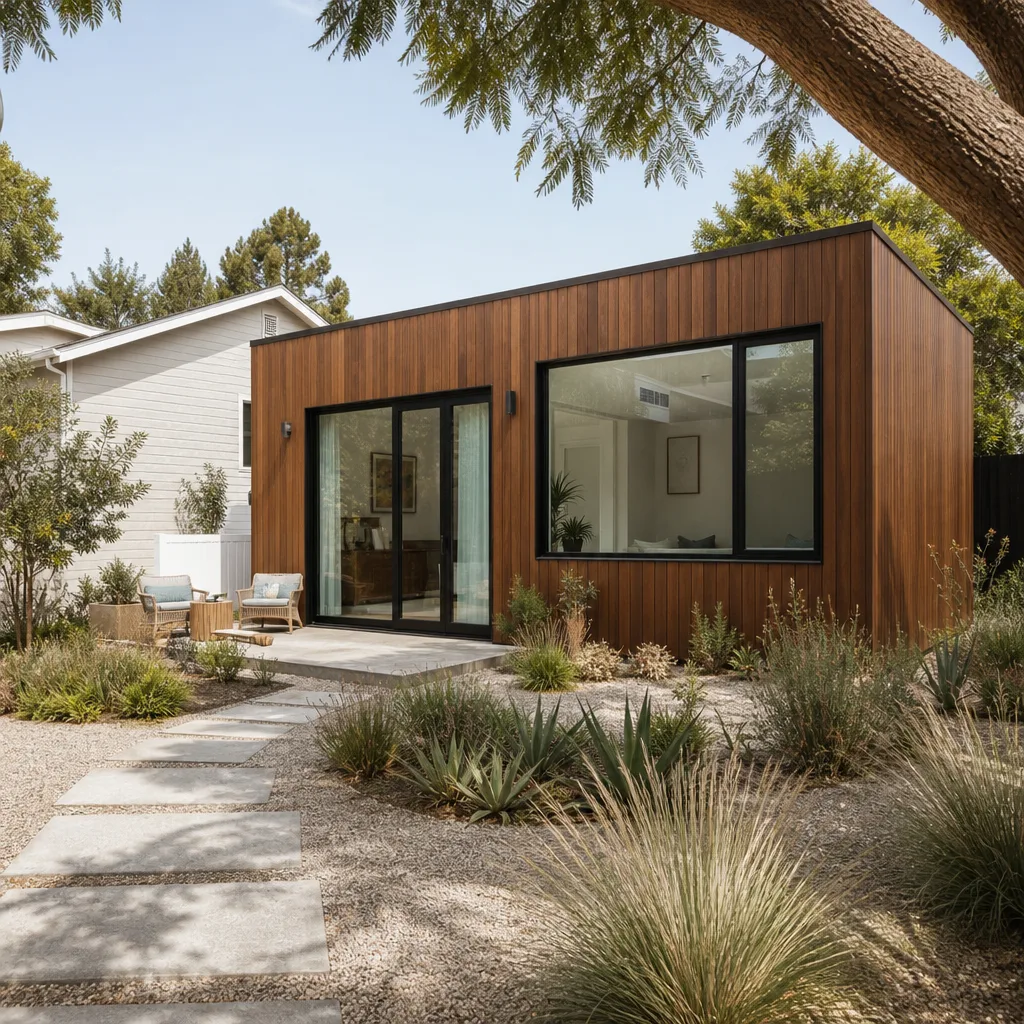
Most of this schedule is owner work: walk-arounds, filters, photos, and a log. Call a professional when the question changes from “does this need attention?” to “what’s causing this and how serious is it?” Specific triggers: a stucco crack that widens between inspections, a door that stops closing, a cluster of new slab cracks, water staining on an interior ceiling after a monsoon rain, or an HVAC system that can’t hold temperature through a July afternoon. Structural or envelope questions on a caliche lot deserve a trained eye rather than a patch and hope. If your ADU has these warning signs, Ellery ADU Studio North Las Vegas offers free estimates in North Las Vegas. Call (866) 403-8955 to schedule yours.
Frequently Asked Questions
Twice a year at minimum, in spring and fall, with a full exterior envelope inspection each spring. Desert UV and heat shorten sealant and roof life enough that annual attention isn’t optional here. Owners often add a quick mid-summer visual check after monsoon rain.
Owner-performed maintenance (filters, photos, walk-arounds) costs a few hundred dollars a year in materials. Professional care – two HVAC services, occasional sealant or stucco repair – typically runs a few hundred to a bit over a thousand dollars annually depending on the unit. Call (866) 403-8955 for a free estimate if you’d like a specific figure for your ADU.
A detached ADU is a smaller structure with a higher surface-area-to-volume ratio, so its exterior moves more with daily temperature swings. In North Las Vegas that shows up as hairline stucco cracks. Cracks under 1/16 inch are cosmetic; wider or recurring cracks warrant a closer look.
New slab-edge cracks that widen over weeks, sticking doors and windows, gaps where stucco meets the slab, and diagonal interior cracks radiating from openings. Movement that accelerates between inspections should prompt a structural consultation rather than a cosmetic patch.
Twice a year, ideally April and September, with filters changed every 30-60 days during cooling season. A small unit running near-continuous cooling through a North Las Vegas summer accumulates wear faster than a house system that cycles.
Yes. A dated photo record and a maintenance log demonstrate due diligence to insurers and future buyers. Keep the permit set with the record; a documented photo record is the same standard we hold ourselves to on every project.
The Bottom Line
A detached ADU in North Las Vegas doesn’t follow a national maintenance template. The desert shortens sealant and roof life by 30-40%, makes annual envelope inspections the baseline rather than the exception, loads filters in a near-continuously running HVAC system, and puts caliche soil movement on your radar in a way most climates don’t. Follow the three non-negotiables – spring envelope inspection, twice-yearly HVAC service, and a slab and drainage check before and after monsoon season – and you’ll stay ahead of the failures that cost the most. Keep a dated photo record so the care is documented. Then treat everything else on the calendar as the lighter, rotating work it should be. If you’re weighing an ADU project or a maintenance concern and want a straight answer, our North Las Vegas team is one call away.
Get a Free Estimate on ADU Maintenance or a New Build
Whether you’re maintaining a detached ADU you already own or planning one from the ground up, we’ll walk you through it with a written scope and a written price before any work starts. Ellery ADU Studio North Las Vegas designs, permits, and builds to a documented standard, and we’ll give you a free second opinion on any written estimate you already have in hand. Call (866) 403-8955 to schedule your free estimate.
Written by the team at Ellery ADU Studio North Las Vegas.