Last updated November 18, 2026
DIY vs Professional Junior ADU & Interior Conversion: What’s Safe to Do Yourself
A homeowner who installs their own finish flooring inside a junior ADU saves $2,400. A homeowner who self-performs the fire-separation wall without a permit faces a stop-work order, mandatory demolition of the assembly, and a re-inspection fee – before anyone can legally sleep in that room. The gap between those two outcomes has almost nothing to do with skill. It comes down to which tasks require a licensed trade to pull the permit, and under Nevada law that line is written down. This guide maps every common JADU task against NRS 624 licensing requirements and IBC fire-separation rules so you can draw a legally defensible boundary around your own DIY work in North Las Vegas.
Quick Answer
You can safely DIY the finishes: interior paint, finish flooring over an existing subfloor, cabinet hardware, window treatments, and other cosmetic work that touches no plumbing, gas, electrical circuit, or fire-rated assembly. You cannot legally or safely self-perform structural work, electrical, plumbing, mechanical (HVAC), or any part of the one-hour fire-separation assembly that separates a JADU from the main house. Those tasks require a licensed trade and a permit pulled in Clark County.
Table of Contents
- Where the Legal Line Actually Sits in Nevada
- Which JADU Tasks Are Genuinely Safe to DIY
- Tasks That Look DIY-Friendly but Trigger a Permit
- The Fire-Separation Wall: Never a DIY Assembly
- What the Inspection Sequence Looks Like
- How DIY Phases Can Void Adjacent Work
- North Las Vegas Climate and Code Context
- Common Mistakes to Avoid
Where the Legal Line Actually Sits in Nevada
NRS 624 is the statute that governs contractor licensing in Nevada, and Chapter 624 of the Nevada Administrative Code sets the dollar thresholds at which work requires a licensed contractor. For residential work, the framework is straightforward: any construction, alteration, repair, or improvement to a structure that requires a building permit must be performed by a licensed contractor. The Nevada State Contractors Board enforces this, and performing unlicensed work is a misdemeanor on a first offense with escalating penalties after that.
Here’s what that means in practice for a junior ADU. The legal boundary is not “can I physically do this.” It’s “does this task require a permit, and does the permit require a licensed trade to pull it.” The current thresholds under NAC 624 for residential improvement work sit at approximately $1,000 for combined labor and materials in most trade categories, but the more useful test is simpler: if the work is covered by the building code and requires inspection, you need a licensed contractor. That covers nearly everything beyond surface finishes.
A junior ADU – a converted space of up to 500 square feet with a kitchenette and bathroom, attached to the main house – almost always triggers a permit at the city level. And any permitted scope within that project is contractor territory. There are narrow exceptions, and we’ll get to them, but the assumption should be that if a JADU permit is open, the trades working inside it need to be licensed.
Which JADU Tasks Are Genuinely Safe to DIY
This is where a homeowner can genuinely save money without legal or physical risk. The tasks below touch no plumbing, no gas, no electrical circuit, no structural member, and no fire-rated assembly. They are cosmetic finishes, and doing them yourself is legal in North Las Vegas without a permit.
- Interior painting – walls, ceilings, trim. Zero permit, zero inspection. Just make sure you use the correct primer on patched drywall so the finish doesn’t telegraph the repair.
- Finish flooring over an existing subfloor – click-lock luxury vinyl plank, laminate, or floating engineered hardwood. The caveat: this is only safe if the subfloor is already flat, dry, and structurally sound. If you’re adding a new subfloor layer or addressing a slab issue, that’s a different task.
- Cabinet hardware – pulls, knobs, hinges. The kitchenette cabinets themselves require an electrical permit for the circuit feeding the mini-fridge and any outlet, but swapping hardware afterward is fine.
- Window treatments – blinds, shades, curtain rods mounted into framing or with anchors rated for the weight. No permit.
- Finish carpentry that’s decorative – baseboard, shoe molding, a floating closet shelf. As long as it’s not a structural element, this is homeowner territory.
- Landscaping outside the footprint – sod, gravel, planting. Check setback requirements before you dig, but planting a shrub isn’t permitted work.
What all these have in common: they can be removed or undone without touching the permitted systems in the JADU. A finish floor lays over a subfloor that a contractor built. Paint goes on drywall a contractor hung and taped to a fire-rated standard. The structural, mechanical, and safety layers stay with the licensed trades.
Tasks That Look DIY-Friendly but Trigger a Permit
This is the trap. Several JADU tasks look like straightforward weekend projects but require a permit and a licensed trade under Clark County rules. We’ve seen North Las Vegas homeowners discover this after already doing the work, which is a much more expensive conversation.
Adding a kitchenette sink. A JADU requires a small kitchen area, and the sink is the trigger. Installing a sink means running supply lines, a drain line, a P-trap, and a vent connection to the existing DWV system. That’s a plumbing permit and a licensed plumber. It also requires ensuring the new fixture doesn’t drain below an existing vent or create a trap-arm length violation. A licensed plumber handles all of this in a single permitted scope. Doing it yourself means a failed rough-in inspection and a mandatory re-do.
Installing a mini-split system. Ductless mini-splits are common in JADUs because they don’t need ductwork. But installing one requires a mechanical permit, a licensed HVAC contractor, and in Clark County, adherence to refrigerant handling requirements. Only a licensed technician can legally charge the system with refrigerant. The electrical circuit feeding the mini-split is also a separate electrical permit. This is a task with two licensed trades wrapped inside it.
Any new electrical outlet or circuit. The JADU will need outlets, lighting, and a circuit for the mini-fridge or microwave. Each of those is an electrical permit and a licensed electrician. The exception that trips people up: replacing a light switch or outlet of the same type in an existing location doesn’t require a permit, but adding a new location or a new circuit does.
Adding or modifying a bathroom. A JADU’s bathroom is a full plumbing scope – shower, toilet, sink, venting. Every part of it is permitted work.
The Fire-Separation Wall: Never a DIY Assembly
The wall between a junior ADU and the main house is a one-hour fire-rated assembly under the International Building Code, and it’s the single most safety-critical element in the whole project. This is not a wall you can hang some drywall on and call done. Here is what the assembly actually contains.
A one-hour rated wood-stud assembly typically includes 5/8-inch Type X gypsum board on both faces of the studs, with specific fastener schedules, taped and mudded joints, and often mineral wool or fiberglass insulation in the cavity. The joints between the drywall panels must be taped and finished to a specific standard so the assembly achieves its rating as a whole, not just panel-by-panel. Any penetration – an outlet box, a duct, a pipe – requires a listed fire-rated penetration sealant. A single unaddressed gap can fail the assembly.
The inspection sequence is what most homeowners miss. The fire-separation assembly is inspected at two stages: the framing and any in-wall components before drywall goes up, then the finished assembly before final. If the assembly fails at the finished stage, the fire marshal or building inspector issues a correction, and the most common remedy is demolition of the drywall back to framing so the assembly can be re-inspected. That’s a full tear-out and a re-do.
The reason we don’t advise any homeowner to self-perform the fire-separation wall is simple: it exposes you to two distinct risks. The first is legal – an unpermitted fire-rated assembly is a code violation the moment a tenant signs a lease, and it gives the tenant and the owner an avenue for liability if anything ever goes wrong. The second is fundamentally practical – a DIY assembly that fails inspection costs more to redo than hiring a licensed crew would have cost in the first place. Under the Haven Standard, this is the one scope we don’t allow to be split.
What the Inspection Sequence Looks Like
For a junior ADU conversion in North Las Vegas, the permit process follows a sequence. Knowing it in advance tells you exactly where the DIY margin exists – which is to say, at the very end, after every licensed trade has finished.
- Plan review and permit issuance. The permit set is submitted to the city, including drawings for the fire-separation assembly, the electrical, the plumbing, and the mechanical scopes. If you’re working with a design-build studio like ours, the drawings and the permit set are the contract deliverable, not an add-on.
- Rough framing and fire-separation framing inspection. The framing, the rated assembly behind the drywall, and any fire-rated penetrations are inspected before drywall goes up.
- Electrical rough-in inspection. Boxes, wires, panel connections – all inspected before drywall.
- Plumbing rough-in inspection. Supply lines, drain lines, vents, tested under pressure before close-in.
- Mechanical rough-in inspection. Mini-split line sets, refrigerant lines, electrical connections.
- Insulation and drywall inspection. The insulation and the drywall schedule that makes up the rated assembly are checked here.
- Final inspection. Fixtures, finish work, and the finished fire-separation assembly are inspected. The certificate of occupancy is issued after this passes.
Homeowner DIY finishes fall between step 6 and step 7 – after the assembly is closed up and inspected, before final inspection. Painting, finish flooring, and hardware belong in that window. Everything else belongs to a licensed trade.
How DIY Phases Can Void Adjacent Work
Here’s the scenario we’ve seen in North Las Vegas more than once. A homeowner has a written design-build contract, and partway through they decide to save money by self-performing the electrical rough-in or the fire-separation wall. The licensed crew built the adjacent framing and finished the adjacent assemblies. When the self-performed phase fails inspection, the inspector rejects the whole wall, not just the DIY section, because the assembly is rated as a unit. The warranty on the licensed work is voided because an unlicensed third party modified the same assembly.
Under the Haven Standard, the written price locks at signing, and the scope covers every trade in the project. When a homeowner tries to split out a phase to a self-perform or a separate unlicensed handyman, the contract no longer matches the scope delivered, and the 365-Day Done Right Promise applies only to the scope Ellery built. That’s not a technicality – it’s the reason the single-contract model exists. If the designer and the builder are the same party under one written price, there’s no one to point at when the wall fails. If the homeowner inserts themselves into the scope, they take on that risk. We can offer a Free Second Opinion on any written estimate already in hand, including one for a conversion you’re considering, and we’ll tell you plainly which lines are DIY-safe and which aren’t.
North Las Vegas Climate and Code Context
North Las Vegas has three climate realities that change what a junior ADU conversion looks like. First, the summer heat: interior finish flooring in a JADU attached to a garage wall or an unshaded west-facing wall takes significant thermal movement. Floating LVP is the safe choice; nailed solid hardwood in those spots is where we see cupping. Second, the low winter humidity: drywall joints in a fire-separation assembly need the correct setting-type compound, not a lightweight all-purpose mud, or the tape will fail as the climate cycles. Third, the monsoon months: any JADU that shares a wall with a garage has a real moisture path, and the fire-separation assembly needs to be detailed with the rest of the wall’s moisture barrier, not installed as an independent panel.
On the code side, North Las Vegas follows the Southern Nevada building code amendments, including specific requirements for detached and attached ADUs. Setback requirements for an attached JADU conversion are typically satisfied by the existing footprint, but a new exterior door or window in the conversion wall triggers a review of the egress path and the light-and-ventilation requirements for a habitable room. In the older North Las Vegas neighborhoods, we see a lot of slab-on-grade homes with 4-inch slabs, which is within range for a conversion and keeps foundation work off the punch list. In newer construction closer to the Beltway, the framing and the fire-separation assemblies are usually already specified, so the drawing package is faster. Either way, the permit set is the product, and getting that right is what makes the conversion legal.
Common Mistakes to Avoid
- Assuming a JADU is too small to permit. A junior ADU conversion in North Las Vegas still requires a building permit and inspections. The 500-square-foot limit doesn’t exempt you from the code.
- Starting finish work before the fire-separation inspection passes. Painting the interior walls before the assembly is signed off means you’ll repaint after the inspection correction. Wait for the inspection, then paint.
- Installing a mini-split without a mechanical permit. Ductless systems are not a plug-and-play appliance. They need a mechanical permit, a licensed HVAC contractor, and an electrical circuit that’s also permitted. Doing it unpermitted means no inspection, no warranty, and a code violation on record when you rent the unit.
- Adding a kitchenette sink as a DIY plumbing project. The supply lines, drain, and vent all have to be inspected before close-in. A failed rough-in is a demo-and-redo.
- Treating the fire-separation wall as a drywall job. It’s a rated assembly with a specific fastener schedule, tape-and-mud standard, and penetration sealing requirement. A homeowner who treats it as cosmetic work has built a wall that will fail the fire marshal.
- Choosing solid hardwood for a JADU over a garage. In North Las Vegas heat and dry winter air, nailed solid hardwood over a slab or an uninsulated exterior wall cups within a season. Floating LVP in the same room holds.
- Splitting a licensed scope to save on one line item. Self-performing an electrical or structural phase to save $3,000 often voids the warranty on $40,000 of adjacent work. The math is almost never in your favor.
When to Call a Professional
Call a licensed professional for any scope in a junior ADU that carries a permit: electrical, plumbing, mechanical, structural framing, the fire-separation assembly, and any work that will be inspected by the city. If your project involves a wet area, a mini-split, a panel upgrade, or a rated assembly, it belongs in a licensed scope. If you’re looking at a JADU conversion and want to know exactly which phases you can save money on and which you can’t, Ellery ADU Studio North Las Vegas offers free estimates in North Las Vegas, with a written price before any work starts. Call (866) 403-8955 to schedule.
Frequently Asked Questions
No. A kitchenette sink requires a plumbing permit, a licensed plumber, and a rough-in inspection in Clark County. The drain, supply lines, and vent connection must all be inspected before the wall closes. If you install it unpermitted, the final inspection will fail and you’ll have to demo the wall to correct it. Call (866) 403-8955 for an exact quote on the plumbing scope; estimates are free.
No. A mini-split requires a mechanical permit, a licensed HVAC contractor, and a separate electrical permit for the circuit. Refrigerant charging is legally restricted to licensed technicians. In North Las Vegas, the mechanical and electrical inspections happen at rough-in, before the unit goes in, which means a self-installed mini-split never gets inspected at all. Call (866) 403-8955 to scope the mechanical work into your written price.
Yes, if the fire-separation inspection has already passed and the subfloor is flat and dry. Interior painting and floating finish flooring over an existing subfloor are cosmetic finishes that don’t touch a permitted system. They fall in the window between the drywall inspection and final inspection, and doing them yourself saves real money without any legal or safety exposure.
The inspector issues a correction, and the standard remedy is demolition of the drywall back to framing so the assembly can be re-inspected. That’s a full tear-out. If the failed assembly is inside a JADU you’ve already rented, a stop-work order follows and the unit can’t legally be occupied until the correction passes. This is the single most expensive mistake in the whole conversion.
Both, depending on the specifics. Slab-on-grade homes with a 4-inch slab are simpler for foundation work and finish flooring. But older framing can have more variation in wall spacing, which complicates the fire-separation detail, and older electrical panels often need a sub-panel or an upgrade to handle the JADU load. We see both cases in North Las Vegas regularly, and it’s determined by what’s actually in the wall.
Prefab and modular options like Tuff Shed, Abodu, or Cover change the delivery model but not the permit requirements. A prefab ADU still needs a permit, site work, utility connections, and inspections. The fire-separation question shifts for a detached unit, but the electrical, plumbing, and mechanical scopes still require licensed trades and permits in North Las Vegas. See our page on new detached ADU design and construction in North Las Vegas for how that scope works.
The Bottom Line
The DIY boundary in a junior ADU is not about skill. It’s about which tasks require a permit and a licensed trade under NRS 624 and the Clark County building code. Cosmetics – paint, finish flooring, hardware, window treatments – are yours to do and save on. Anything structural, electrical, plumbing, mechanical, or part of the fire-separation assembly belongs to a licensed scope, and the fire-separation wall in particular should never be self-performed. If you want a written price on the licensed scope, our garage conversion ADU service in North Las Vegas and ADU design and permitting work in North Las Vegas are both built under one contract. The permit set and the construction are the same deliverable.
Ready to Price the Licensed Scope?
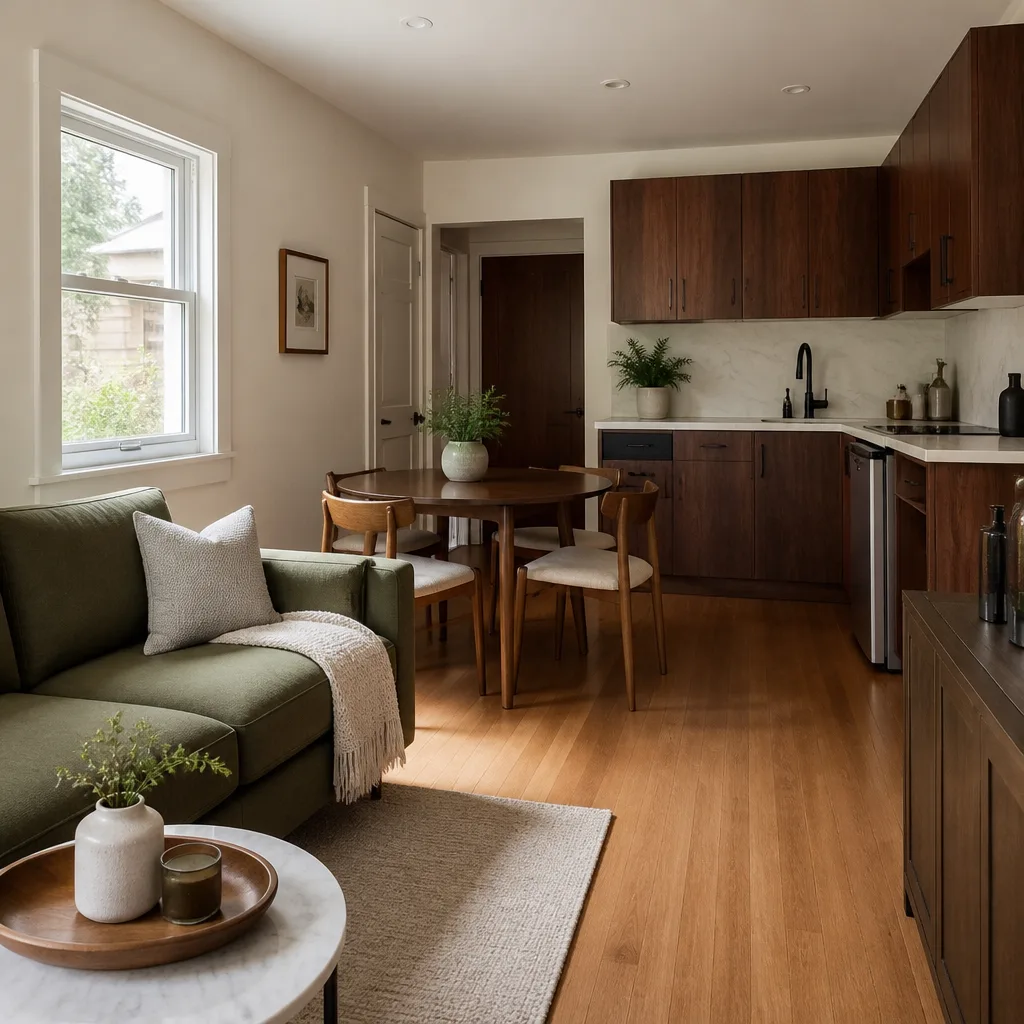
If you’re weighing a junior ADU conversion in North Las Vegas and you want to know exactly which lines are DIY-safe and which require a licensed trade, we’ll give you a written price before any work begins, with a documented photo record on every visit. Call Ellery ADU Studio North Las Vegas at (866) 403-8955 for a free estimate. We offer a Free Second Opinion on any written estimate already in hand, and a live person answers calls 24/7.
Written by the team at Ellery ADU Studio North Las Vegas.