Last updated November 18, 2026
How Long Does ADU Site Prep & Utilities Take? Timelines and What to Expect
NV Energy’s new service application for an ADU in North Las Vegas carries a standard 8 – 12 week engineering review. Most owners file that application after their building permit is approved, and that single sequencing choice costs them two to three months before one shovel touches dirt. The utilities and the city plan check are independent processes, and they can run at the same time. This guide maps the actual critical path for ADU site prep and utilities in North Las Vegas: how long each phase runs, which applications can be filed concurrently with plan check, which ones the utility won’t touch until you have an issued permit, and what the seasonal calendar does to inspection dates.
Quick Answer
ADU site prep and utilities in North Las Vegas typically take 12 – 18 weeks from application to a site ready for vertical construction, and that number is driven by utility review queues rather than by physical work. The shovel-and-trench portion of the job is only 2 – 4 weeks. Everything else is soils investigation, site survey, three separate utility authorities processing applications in parallel, and the inspection sign-offs Clark County requires before a foundation pour.
Table of Contents
- Why the Critical Path Runs Through Utilities, Not Construction
- Phase-by-Phase Timelines
- Which Applications Run in Parallel and Which Must Wait
- The Three Variables That Add Weeks
- Seasonal Timing in North Las Vegas
- What “Site Ready” Actually Means
- Building a Schedule That Matches Reality
Why the Critical Path Runs Through Utilities, Not Construction
The work everyone pictures when they think about ADU construction is the part that takes the least time. Excavation, trenches, conduit, a slab. In North Las Vegas, that physical site prep has run 2 – 4 weeks on nearly every project we’ve coordinated. What stretches the calendar is the paperwork, and specifically the fact that it runs through three separate authorities with three separate queues.
The three are the city, NV Energy, and the Las Vegas Valley Water District. Each processes its own application on its own timeline. None of them talks to the others. When a homeowner or a less-organized builder treats them as sequential steps – permit, then power, then water – the queues stack end to end and the project picks up 6 – 10 weeks of pure waiting. That’s the failure mode. It has nothing to do with the trades and everything to do with the order the applications go in.
North Las Vegas adds its own wrinkle. A large share of the lots here, particularly the newer subdivisions that went up between 2005 and 2020, sit on grid zones where NV Energy is tracking transformer capacity more closely than it did a decade ago. That capacity review happens during the engineering stage of the application. File early and the review runs while you’re still finalizing drawings. File late and it runs after everything else is done, which is the worst possible time to learn the local transformer needs a larger service.
Homeowners weighing a garage conversion often have a shorter site prep path than new detached construction, because the utility service is usually already sized for the structure. That’s one of the reasons a garage conversion ADU in North Las Vegas can move faster through this stage than a ground-up build.
Phase-by-Phase Timelines
These are the intervals we plan against in North Las Vegas. They’re ranges, not promises, because the utility queues move with their own workload, but they’re grounded in what we’ve actually seen clear.
- Soils investigation: 1 – 2 weeks. A geotechnical engineer bores test holes and reports on bearing capacity and expansive soil. This has to happen before foundation design is final, so it’s one of the first things we schedule.
- Utility applications: 8 – 14 weeks depending on authority. NV Energy’s new service engineering review is the long pole at roughly 8 – 12 weeks. LVVWD runs its own process for water service. These are the items that must start early.
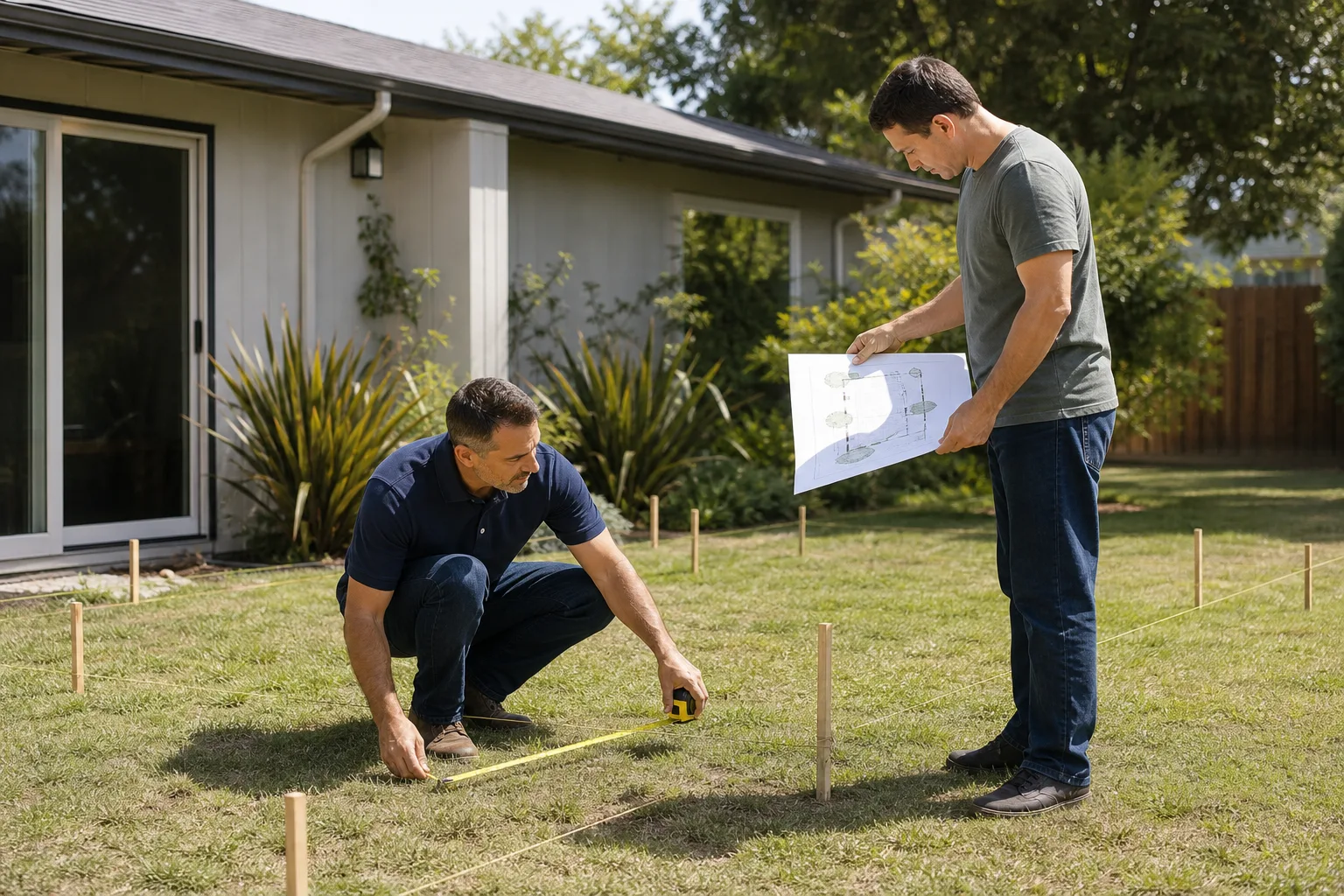
- Site survey and staking: 1 week. A licensed surveyor establishes setbacks, pin locations, and grade. On lots with tight side yards, this is where you find out whether a variance is needed.
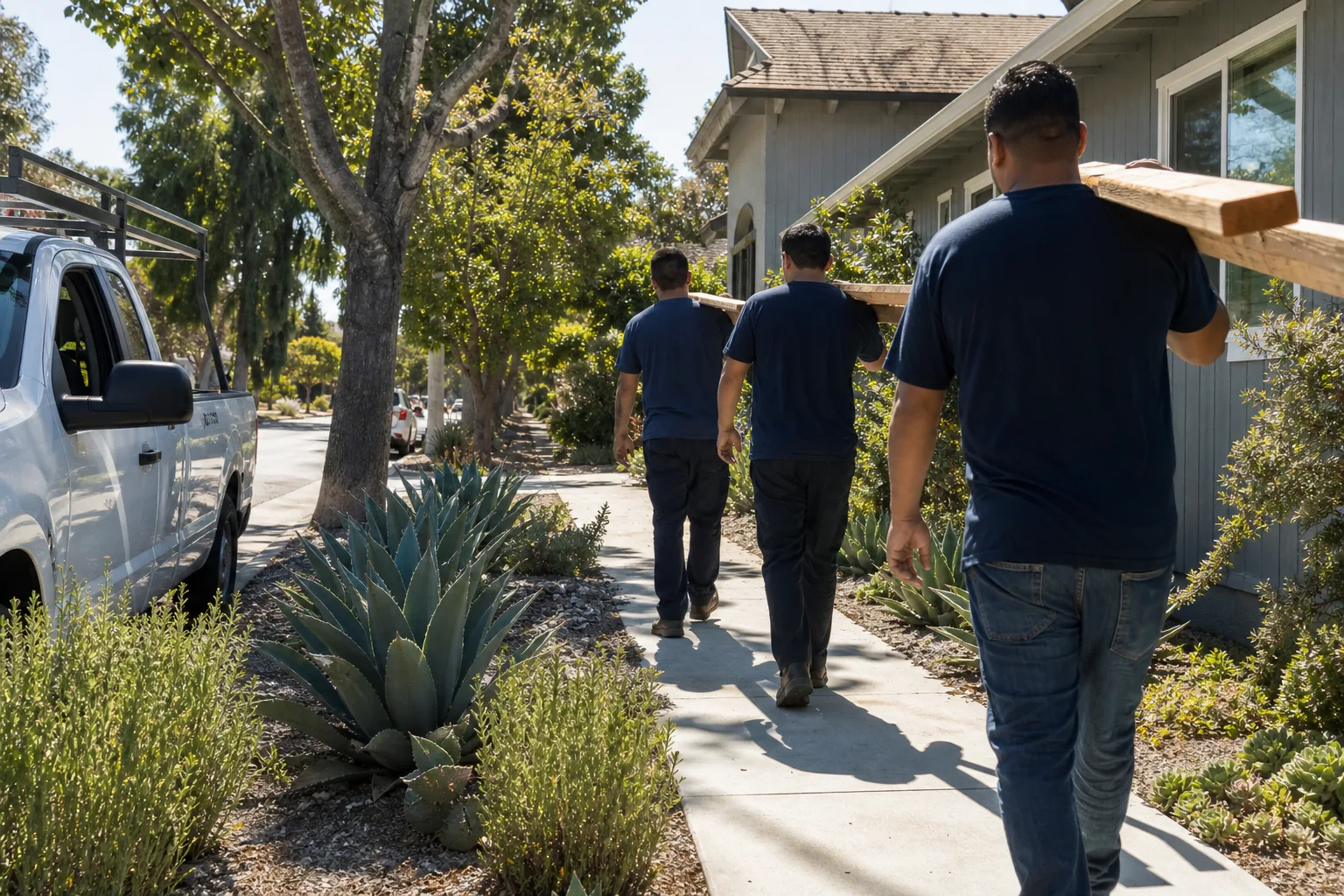
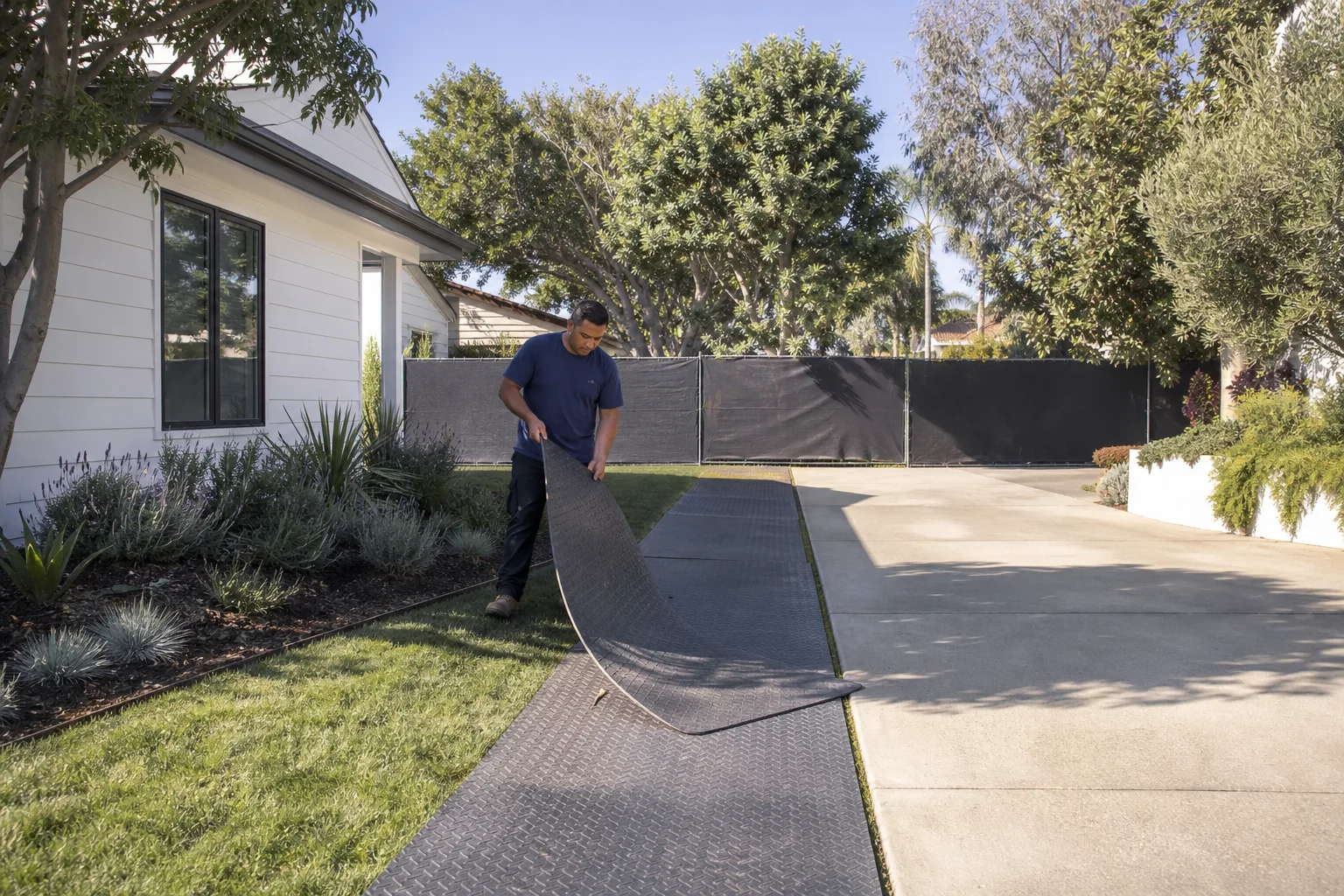
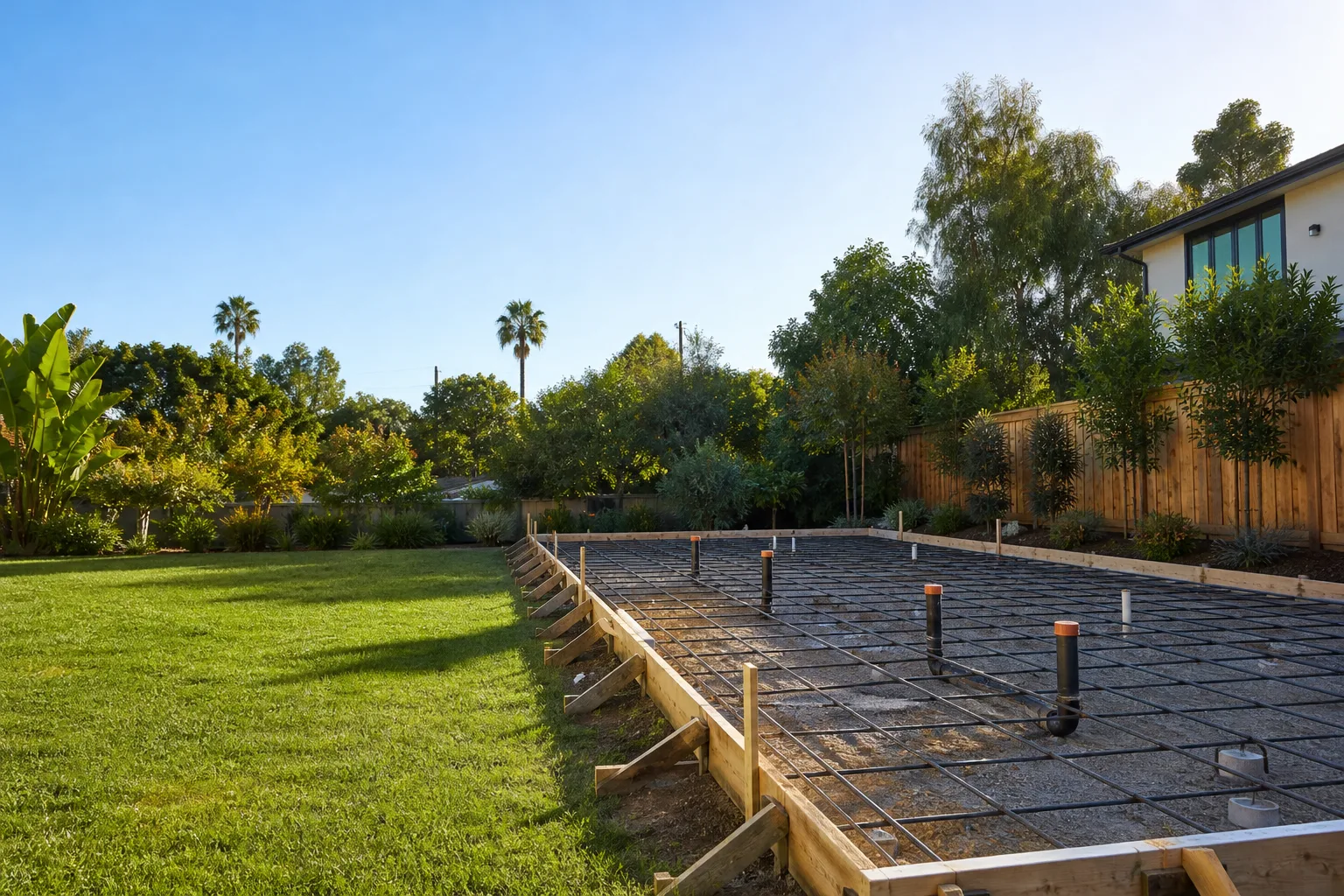
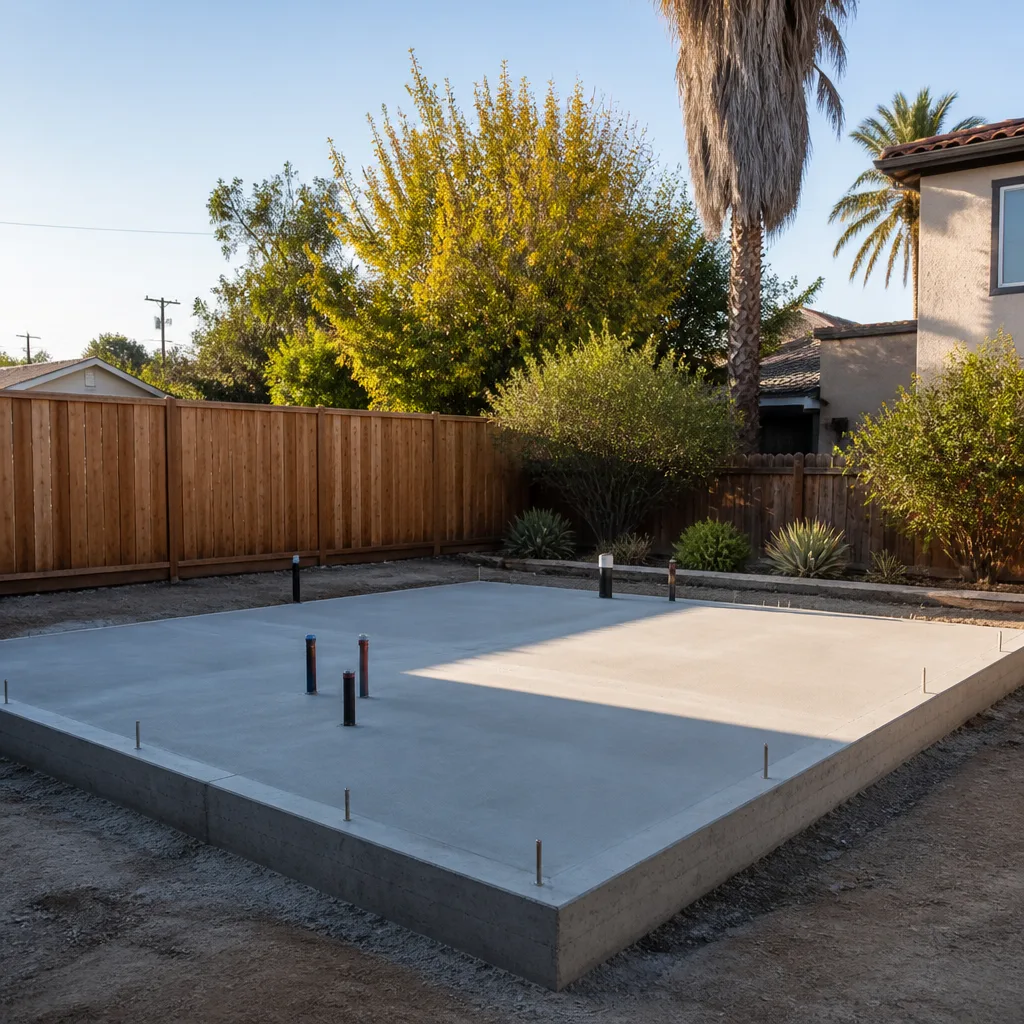
- Physical site prep and utility rough-in: 2 – 4 weeks. Demo, excavation, trenching, conduit, sewer and water line tie-ins, and the rough grade the formwork will sit on.
Add those up as sequential steps and you land anywhere from 12 to 21 weeks. Run the utility applications concurrently with the survey and soils work, and you compress to 12 – 18 weeks, with the utility review absorbing the slack instead of extending it. On a straightforward lot, we’ve seen the physical portion finish before the NV Energy engineering review clears. That’s the outcome you’re aiming for: waiting on a stamp while standing on finished trenches rather than waiting on trenches after the stamp lands.
The permit set itself is a parallel track too. If drawings are still being finalized while the utility applications are in, you don’t lose time. The ADU design and permitting phase in North Las Vegas and the utility queues are the two tracks that should be moving together.
Which Applications Run in Parallel and Which Must Wait
This is the section that saves the most time. The distinction is real and it’s specific, so here it is plainly.
Can be submitted concurrently with plan check:
- NV Energy new service application. It’s independent of the building permit. You don’t need the permit in hand to file the engineering review request.
- LVVWD pre-application. The district will open the file before the permit is issued, which lets them flag a water main upgrade requirement early rather than at service connection.
- Soils investigation and site survey. Both are field work that informs the drawings; neither requires an issued permit.
Requires an issued permit first:
- The utility trench permit and associated inspection bookings.
- Physical trenching and rough-in. The inspector needs a permit to inspect against.
- Clark County grading permit, when the lot requires one (more on the threshold below).
The practical takeaway: the three long-lead items – NV Energy, LVVWD, and soils – all start on day one, the same week the permit application goes in. The short items start the day the permit is issued. A homeowner who does this finishes site prep in the 12 – 18 week range. A homeowner who file-stacks the utilities after the permit runs 20+ weeks and never understands why, because at no point does anyone say “you did this out of order.”
If you’re building new rather than converting, the same sequencing applies to a new detached ADU in North Las Vegas; the difference is that a new structure usually needs a full new service rather than a panel addition, which makes the NV Energy lead time even more important to start early.
The Three Variables That Add Weeks
Three specific conditions extend site prep in North Las Vegas. Each is knowable early if someone checks for it.
NV Energy capacity holds. Certain grid zones in the city are tracking transformer capacity more tightly than others, particularly in subdivisions that added density after the original build-out. When your lot falls in one, the engineering review can hold pending a capacity study or a service upgrade that adds 2 – 4 weeks. The only way to know is to have the application in and let the review flag it. Waiting doesn’t avoid the hold; it just moves it later.
LVVWD water main upgrade requirements. ADU meter size drives this. A sub-meter or a larger service can trigger a district requirement to upsize the main or add a tap, which is a district-side scope item with its own queue. File the pre-application early and the district tells you whether your lot triggers it before you’re committed.
Clark County grading permit. Lots with more than 50 cubic yards of grading movement require a grading permit in addition to the building permit. On a flat infill lot, site prep stays under that threshold. On a sloped lot or one requiring significant cut and fill to reach a buildable pad, you cross it and pick up a grading review. That’s a design decision, not a surprise, but only if the survey happens before the site plan is locked.
The pattern across all three: each is a known risk category, each is checkable in the first two weeks, and each adds weeks only when it’s discovered late. When we quote site prep, we flag which of the three apply to a given lot in the written scope, under the same fixed price that covers the rest of the project, per Haven Standard Clause 1.
Seasonal Timing in North Las Vegas
The desert calendar is not neutral. Two seasons move inspection dates.
July and August heat. Utility trench inspections during the peak heat months run under heat-delay protocols. Crews work early hours, and inspection windows tighten as the day goes on. We plan 1 – 2 weeks of float into any June – August schedule and we try to get trench inspections booked for morning slots. A trench that sits open overnight in July is also a trench exposed to drying and safety concerns, so there’s a practical limit on how far you can push the inspection out.
July through September monsoon. The afternoon storms that roll through the valley in monsoon season do something specific to site work: they soak the subgrade. A compacted pad that passed testing, then takes an inch of rain, may need re-testing before the formwork goes down. That re-test is a compaction test, and scheduling one after a storm adds days. The physical fix is usually minor. The scheduling consequence isn’t. We watch the forecast before we schedule a compaction test in monsoon season and build buffer around it.
Spring (March – May) and fall (October – November) are the cleanest windows for site prep in North Las Vegas. That’s not a marketing line; it’s when the inspection calendar is least likely to move on you. If your permit timeline lands the physical work in July or August, the schedule needs more slack, not less.
What “Site Ready” Actually Means
“Site ready” has a specific definition in North Las Vegas, and it’s narrower than most owners assume. A graded lot with trenches backfilled is not site ready. Before Clark County will approve a foundation pour, the following have to clear:
- Soils report on file and foundation design matching the report’s recommendations.
- Utility rough-in inspections passed – the trench inspection for sewer, water, and conduit.
- Grading inspection signed off, where a grading permit was required.
- Setback verification against the staked survey, confirming the structure sits where the permit says it sits.
- Compaction testing passed on the pad after any disturbance from weather or traffic.
Each of those items is an inspection with its own scheduling lead time. They don’t all clear on the same day. That’s why the last two weeks before vertical construction start feel slow even when nothing on site appears to be happening. It’s the sign-off stack, and it’s a necessary part of the path. The moment those items are green, foundation work begins, and site prep is drawing to its close.
Every one of those inspections generates a documented photo record. On every visit to the site, our team captures what was found and what was done, and the client gets it. You have a photographic record of the state of your site at each stage, not a summary of how the process felt.
Building a Schedule That Matches Reality
Here’s the schedule logic that actually holds in North Las Vegas, stripped to its bones.
Week 1: File the permit application. File the NV Energy new service application the same week. Open the LVVWD pre-application. Schedule the soils investigation and the survey. Everything on day one.
Weeks 1 – 2: Soils investigation. Survey and staking.
Weeks 2 – 14: Utility reviews run in the background. Plan check runs in the background. Drawings finalize and the permit set gets submitted or resubmitted as comments come back.
Weeks 12 – 16: Permit issues. Utility trench permit and grading permit (if applicable) get filed. Physical site prep and rough-in begin.
Weeks 14 – 18: Rough-in inspections, grading inspection, compaction testing, setback verification. Site ready for foundation.
The entire logic rests on one principle: start everything that can start in week one, in week one. The two-month gap that most projects lose lives in the space between permit issuance and utility application. Close that gap and the rest of the schedule protects itself. When we plan a project, the written price includes the site prep scope with the utility line items named individually, and the 365-Day Done Right Promise covers the finished work against the permitted drawings. You know what you’re paying for before anything begins.
Common Mistakes to Avoid
- File-stacking the utility applications after permit approval. This is the single most expensive sequencing error in North Las Vegas ADU construction. It adds 6 – 10 weeks that no amount of crew effort can recover.
- Assuming the physical site prep is the slow part. It’s 2 – 4 weeks. Budget your anxiety for the utility queues instead.
- Skipping the LVVWD pre-application. The water main upgrade question only surfaces at connection if nobody asks it early. Ask early and it’s a line item, not a delay.
- Ignoring the 50-cubic-yard grading threshold. A sloped lot quietly crosses it and picks up a grading permit review the schedule never accounted for.
- Scheduling a compaction test in monsoon season without float. A monsoon storm can undo a passed test, and the re-test takes days.
- Trenching in July without planning for heat-delay protocols. The inspection date moves; the schedule doesn’t.
- Not tracking which grid zone the lot sits in. The NV Energy capacity hold is knowable, but only if the application is in early enough for the review to flag it.
When to Call a Professional
If your lot is sloped, if it sits in a subdivision built after 2005, if the survey uncovers a setback problem, or if you’ve received a written estimate that doesn’t separate the utility line items from the general site prep scope, it’s worth a conversation before you commit. Those are the situations where sequencing mistakes compound, and where a free second opinion on a written estimate you already have in hand can catch a schedule that won’t hold. Ellery ADU Studio North Las Vegas offers free estimates in North Las Vegas – call (866) 403-8955. A live person answers 24/7, and every project is quoted with a written price before work starts.
Frequently Asked Questions
Plan on 12 – 18 weeks from utility application to a site ready for vertical construction. The physical work – excavation, trenching, rough-in – is 2 – 4 weeks of that. The rest is the NV Energy engineering review (8 – 12 weeks), LVVWD processing, soils investigation, survey, and inspection sign-offs. Call (866) 403-8955 for an estimate tailored to your lot – estimates are free.
Yes, and you should. The new service application is independent of the building permit and runs on its own engineering review. Filing it the same week you submit your permit application is the single highest-leverage scheduling move on an ADU project in North Las Vegas. Call (866) 403-8955 if you want a second opinion on where your schedule stands.
Meter size is what the utility allocates to your ADU’s service. A water main upgrade is a district-side requirement triggered when your lot’s existing main can’t support the allocation, usually out of LVVWD’s own process. The upgrade is the expensive surprise; the pre-application is what surfaces it early. Call (866) 403-8955 for a free estimate that separates these line items.
Yes, the July – September monsoon can undo a compaction test and add days to re-testing. It’s not a washout, but it’s a scheduling factor, and any schedule that ignores it will slip. Call (866) 403-8955 for a free estimate that builds a realistic monsoon buffer into the timeline.
When the site requires more than 50 cubic yards of grading movement. Flat infill lots usually stay under it; sloped lots and lots needing significant cut and fill cross it. The survey and soils report tell you which category your lot falls in before the site plan locks. Call (866) 403-8955 for a free estimate.
No. Under Haven Standard Clause 1, every project is quoted with a written price before any work begins, and the scope is locked. The utility line items are named in that written scope, so the capacity holds, water main questions, and grading thresholds are priced or flagged at the start rather than discovered mid-job. Call (866) 403-8955 for a free estimate.
The Bottom Line
ADU site prep in North Las Vegas takes 12 – 18 weeks, and almost none of that time is demolition or trenching. The long poles are the three utility authorities, each with its own queue, and the discipline that saves 6 – 10 weeks is filing the NV Energy and LVVWD applications in week one, alongside the permit, rather than after it. Get the sequencing right and the physical work fits inside the review windows. Get it wrong and you wait two months for a stamp on a lot that’s already graded. The variables worth checking early are grid zone capacity holds, water main upgrade triggers, and the 50-cubic-yard grading threshold. The season worth planning around is July through September, when heat protocols and monsoon storms both touch the inspection calendar.
If you have a written estimate for ADU site prep and want to know whether the schedule that comes with it is realistic, or if you haven’t started yet and want a written scope with the utility line items named, call Ellery ADU Studio North Las Vegas at (866) 403-8955 for a free estimate. Every project is covered by the 365-Day Done Right Promise and the Haven Standard. A live person answers, and you can start at the Ellery ADU Studio North Las Vegas home page, or read more about the phases in our ADU design and permitting in North Las Vegas and new detached ADU in North Las Vegas guides. If prefab or modular is on your list, we specify and coordinate systems from brands including Boxabl, Plant Prefab, and James Hardie within the same single contract.
Written by the team at Ellery ADU Studio North Las Vegas.