Last updated November 18, 2026
Junior ADU & Interior Conversion Warning Signs Every Homeowner Should Know
A junior ADU that rents for $1,400 a month in North Las Vegas is worth roughly $200,000 in capitalized value. The warning sign that destroys that value – an open permit with no final inspection – is invisible to any buyer or tenant who doesn’t pull the Clark County permit record before signing anything. This guide shows North Las Vegas homeowners how to read the documents before the walls: how to check permit status at a specific address, what a fire-separation assembly should actually look like, and which electrical and plumbing shortcuts Clark County inspectors catch every week.
Quick Answer
The most serious junior ADU warning signs are not cosmetic. They live in the permit record (an open, expired, or never-finaled permit means the unit has zero legal rental status), in the fire-separation assembly between the JADU and the main house, and in the electrical panel. If a JADU was built or converted without a closed-out Clark County permit, treat it as an unfinished project no matter how polished the finishes look.
Table of Contents
- How to Read the Clark County Permit Record for a JADU
- Fire-Separation Wall Warning Signs
- Electrical Warning Signs: The Panel Tells the Story
- Egress Window Warning Signs
- Kitchenette and Plumbing Warning Signs
- The Document-First Walkthrough, Step by Step
- Common Mistakes to Avoid
- When to Call a Professional
How to Read the Clark County Permit Record for a JADU
Every warning sign on this list can be verified in about fifteen minutes before you ever set foot inside a JADU. The permit record is the first document to pull, and it outranks every finish in the unit. A JADU’s legal rental status depends on a closed, finaled permit – not on whether the kitchenette looks complete.
Here’s the sequence we walk clients through when they’re evaluating an existing North Las Vegas property with a converted interior suite or garage conversion:
- Search the address in the Clark County permit portal under both the parcel number and the street address. Some records index differently, and a second search catches permits filed under an alternate address format.
- Read the status field carefully. “Finaled” or “Closed” means an inspector signed off on the finished work. “Open” or “Issued” means construction started but no final inspection ever happened. “Expired” means the permit lapsed – often because work stalled – and the work is legally incomplete.
- Check for the certificate of occupancy or final inspection record. A JADU without this is not a legal dwelling unit, full stop.
- Pull the inspection history. A permit can show as “finaled” but with failed inspections logged mid-project – those notes tell you what was corrected and how.
In North Las Vegas, we regularly see expired permits on 2018-2021 era conversions where a homeowner started a garage conversion, ran out of budget, and rented the space anyway. An expired permit doesn’t disappear when a tenant moves in. It sits in the record and voids the rental’s legitimacy the moment a buyer’s lender orders a permit check.
Fire-Separation Wall Warning Signs
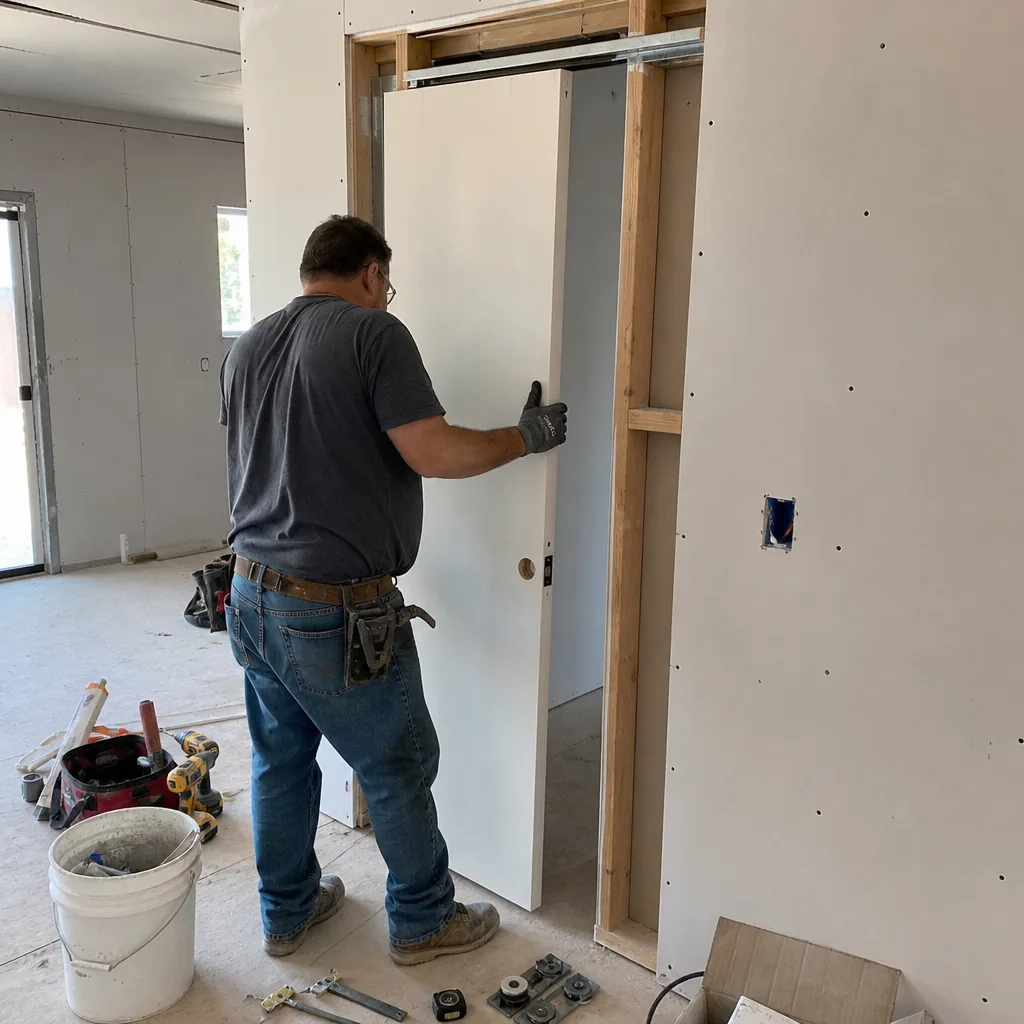
The wall between a junior ADU and the main house is a life-safety assembly, and it’s the single most-skipped item in owner-built conversions. California and local code require a fire-rated separation between a JADU and the primary dwelling – typically a rated wall and a rated door, often 20-minute or greater depending on the assembly. Here’s what to inspect, and what a violation looks like:
- A hollow-core door between the JADU and main unit. Hollow-core doors carry no fire rating. A JADU entry door must be labeled as a rated assembly, and the label should be visible on the door edge or frame.
- Missing self-closer. A fire-rated door needs a self-closing mechanism so it can’t be propped open and left open during a fire. If the door swings free and stays where you leave it, that’s a code violation.
- No fire-rating label on the frame. Rated doors and frames carry a stamp or metal tag from the manufacturer. No label means no documented rating, which usually means the assembly fails inspection.
- Gaps around the door and penetrations. A rated door with a half-inch gap at the bottom, or holes punched through the separation wall for cables, defeats the assembly.
Fire-separation defects are lease-voiding. A tenant’s attorney or a buyer’s inspector will find them, and the correction cost – replacing a door and frame, re-sealing penetrations, sometimes rebuilding a section of wall – runs higher than the savings from skipping the rated door in the first place. In North Las Vegas, we see this most often on quick flips where a hallway closet was converted into a sleeping nook without any wall upgrade at all.
Electrical Warning Signs: The Panel Tells the Story
Electrical is the warning sign homeowners miss because the lights work. Working lights prove almost nothing. What matters is how the load was calculated and permitted. Two specific red flags:
- A JADU fed by an extension cord or a plug-in circuit. A legal dwelling unit needs dedicated circuits, hard-wired. If you see a cord running through a doorway or a wall penetration to power a mini-split or water heater, the work is unpermitted.
- A single 15-amp circuit added to the main panel with no load calculation. Adding a JADU means adding a kitchenette, a water heater, heating and cooling, and lighting. A load calculation determines whether the existing service panel can carry it. When someone skipped that step and just added a breaker, you’re looking at an overloaded panel and a permit that won’t pass final.
Here’s how to check without opening anything energized. Note the panel brand and service amperage on the label, then match it to the panel schedule. A 100-amp panel serving the main house plus a JADU with an electric water heater and a heat pump is a load calculation that usually fails. Verify the panel schedule against the physical breakers – a handwritten legend with mismatched circuits signals DIY work. Do not remove a panel cover yourself. Panel interiors carry lethal voltage and the work requires a licensed electrician; that’s not a task for a homeowner with a screwdriver.
Egress Window Warning Signs
A bedroom in a JADU must have an emergency escape opening that meets code. The standard is a clear opening of at least 5.7 square feet, with minimum width and height dimensions and a sill height low enough for an adult to climb out and a firefighter to enter. Warning signs to check on a walkthrough:
- A window that opens onto an interior room. A window into a hallway, closet, or enclosed porch is not an egress path. The opening must lead directly to the exterior.
- A fixed-pane or sliding window with a measured opening under 5.7 sq ft. A window that “opens” but measures smaller than the code minimum fails.
- A window blocked by furniture or a built-in cabinet. A code-compliant window that can’t be reached is an inspection fail.
- A high sill. A window set near the ceiling with no step is not a usable egress path.
Bring a tape measure to the walkthrough. Measure the clear opening of every sleeping room window – width times height – and write the numbers down. In North Las Vegas, we see this failure constantly on conversions where a storage room was turned into a bedroom with its original window untouched. It looks like a bedroom, but code says it doesn’t get to be one until that opening is corrected.
Kitchenette and Plumbing Warning Signs
Junior ADU kitchenettes are a frequent weak point because the plumbing is small and often hidden. Clark County inspectors still check every drain and every water heater connection, and each of the following is a certificate-of-occupancy denial trigger:
- An unvented drain. Every sink and fixture requires either a vented connection or an approved air-admittance valve. An unvented drain traps sewer gas and fails inspection.
- A missing P-trap. A drain run straight to the wall without a trap is a code violation and a smell source.
- A water heater with no temperature-and-pressure relief valve, or a valve with an absent or non-compliant discharge line. The T&P valve must be present and plumbed to a safe discharge point. A capped or missing valve is a serious safety defect, not a checkbox.
If the water heater is a tank unit set in a closet with no drain pan and no discharge pipe, that’s a fail, and it’s a routine one in North Las Vegas conversion units where a previous owner installed the cheapest possible 20-gallon tank. Take photos of the water heater label, the T&P valve, and the discharge line termination before you leave the walkthrough.
The Document-First Walkthrough, Step by Step
Reading the permit record before the walkthrough changes what you look for and how you weigh what you see. Here’s the order of operations we recommend to any homeowner evaluating a JADU or interior conversion, whether they’re buying or deciding what to fix on their own property:
- Pull the permit record for the parcel and address. Confirm status: finaled, expired, or open.
- Download the approved plan set if the record has it attached. The approved drawings show what the fire-separation wall should look like, where egress windows belong, and which circuits were permitted.
- Compare the approved set to what’s actually built. Any deviation is a change that required its own approval – or is a violation.
- Check the fire door for a label, a self-closer, and a tight frame.
- Measure every sleeping-room window opening. Write down the clear opening dimensions.
- Photograph the electrical panel label and schedule without removing the cover.
- Photograph the water heater T&P valve and discharge line.
- Check kitchenette traps and vents.
This walkthrough is the same discipline that drives our Ellery ADU Studio North Las Vegas home process: the permit set is the product, and the finishes follow it. It’s also the reason ADU design & permitting in North Las Vegas starts with the drawings, not the cabinets. The documentation a client receives – the approved permit set, the written scope, and a photo record of every visit – is what makes a JADU defensible years later when a lender, buyer, or tenant asks the question that matters.
Why a Finaled Permit Actually Matters for Rental Value
“Finaled” means an inspector signed off on the completed work. That signature is the difference between a legal dwelling unit and an expensive storage room. A JADU with an expired or open permit has no legal rental status, which means a lease signed against it can be challenged, a rental income stream can be shut down on short notice, and a buyer’s financing can fall apart during a permit check.
In North Las Vegas, we see the three statuses play out in specific ways:
- Finaled: The unit is a legal dwelling. Inspectors signed the final, and the certificate of occupancy (where required) exists.
- Open: The permit was issued and construction began, but no final. The work is legally incomplete, and any use as a rental is at risk.
- Expired: The permit lapsed, usually because work stalled. It doesn’t disappear – reopening requires a new permit and fresh inspections.
We’ve seen a kitchenette and bath addition on a 1960s ranch in the older parts of North Las Vegas that was rented for years and showed an expired permit the whole time. Correcting the record meant reopening the permit, correcting the fire door, and passing a fresh final. That ran into four figures. Skipping that step looked cheaper – right up until the lender pulled the record.
How Egress, Fire Separation, and Electrical Interact
These three defects compound. A JADU with a hollow-core fire door, a bedroom window that opens to an interior room, and a single 15-amp circuit feeding the whole unit has three separate code failures in one wall, and each one independently blocks a final inspection. Correct them together, not piecemeal.
In our experience, the cheapest correction sequence is: fix egress first (it’s usually the least intrusive), fix the fire separation second (a door and frame replacement plus sealed penetrations), fix electrical last (load calculation, panel work, dedicated circuits). That order lets a single set of inspections close out the whole unit. The comparison exercise is the same one we run on garage conversion ADU in North Las Vegas projects, where existing slabs, existing walls, and existing panels have to be reconciled against a fresh plan set.
Common Mistakes to Avoid
- Trusting a completed-looking renovation. Finishes prove nothing about permit status. Pull the Clark County record before the walkthrough – every time.
- Skipping the fire-door label check. A door that looks solid can still be hollow-core. Look for the manufacturer’s rating label on the edge or frame; no label means no rated assembly.
- Assuming a window that “opens” passes egress. Measure the clear opening. If it’s under 5.7 sq ft, it fails, and a low-cost white vinyl slider often isn’t a fix because the frame limits the opening.
- Ignoring the electrical panel’s rated amperage. Ask whether a load calculation was done. In North Las Vegas, a 100-amp panel serving a main house plus a JADU is a calculation that routinely fails and is the most expensive of these defects to correct.
- Skipping the T&P valve check. A water heater with no relief valve or no discharge line is a serious safety defect and an automatic inspection fail. It’s also cheap to fix early – and expensive to discover after you’ve bought.
- Assuming a “finaled” permit solves everything. Read the inspection history too – failed inspections and corrected deviations tell you what was actually built up to code and what was patched.
- Relying on a contractor’s verbal assurance that “the permit will get closed after.” An open permit stays open until an inspector signs a final. That final has to be a condition of the contract, not a promise.
When to Call a Professional
Bring in a professional the moment a permit shows open or expired, or when you can’t find the permit record for a JADU at all. Fire-separation assemblies, panel load calculations, and water heater safety valves are all areas where an inspection failure costs more to fix after you’ve closed than before. Call a licensed electrician for anything involving the panel interior; don’t remove the cover yourself. A licensed design-build team can pull the records, compare the approved set to what’s built, and deliver a written scope with a written price before any work starts – the same approach we apply to every new detached ADU in North Las Vegas project we take on. Ellery ADU Studio North Las Vegas offers free estimates in North Las Vegas – call (866) 403-8955.
Frequently Asked Questions

Search the Clark County permit portal by street address and by parcel number, then read the status field: finaled means inspected and closed, open means construction started without a final, and expired means the permit lapsed. Pull the inspection history too, because failed inspections stay on the record.
No. A JADU with an open or expired permit has no legal rental status, and a lease signed against it can be challenged at any point. Pull the permit record before signing a lease or buying a property with a JADU, and correct the permit before renting the unit.
It should be a rated door with a visible fire-rating label, a working self-closer, and a tight frame with sealed penetrations. A hollow-core door, a door that swings free with no closer, or a door with no label is a code violation and a lease-voiding defect.
A JADU fed from an extension cord or a single 15-amp circuit added to the existing main panel without a load calculation is the most common electrical red flag. Both indicate unpermitted work, and both block a final inspection.
Correction costs vary with the defect and with the layout of the unit. The larger point is the order: fix egress, fire separation, and electrical together so one set of inspections closes the whole unit. For an exact written price on a specific North Las Vegas property, call (866) 403-8955 – estimates are free.
It shouldn’t. Under our Haven Standard Clause 1, every project carries a written price before any work begins, and that scope stays locked at signing. Ask for the written scope and the photo record on every visit, and treat any verbal-only estimate as an unfinished document.
The Bottom Line
The warning signs that actually cost North Las Vegas homeowners money aren’t visible in a walkthrough. They’re in the permit status (open, expired, or finaled), the fire-separation assembly, the panel’s load calculation, the egress window measurement, and the water heater’s T&P valve. Pull the Clark County permit record first, compare the approved plan set to what’s built, and document what you find. A JADU with a finaled permit and a written record of correction is an asset you can rent and sell. A JADU without one is a liability dressed in new finishes. If a permit shows open, expired, or can’t be located at all, get an independent read before you sign anything. A second opinion on any written estimate is free.
Written by the team at Ellery ADU Studio North Las Vegas.
Ready to find out what your North Las Vegas JADU or interior conversion needs before it costs you? Call (866) 403-8955 for a free estimate and a written scope. A live person answers calls 24/7, and if you already have a written estimate in hand, we’ll give you a free second opinion on it.