Last updated November 18, 2026
How to Hire an ADU Contractor in North Las Vegas: A Step-by-Step Guide
A contractor who quotes you $180,000 for an ADU without first producing a site plan is not bidding on your project. They’re bidding on a hypothetical. The number will move once drawings exist, and by then you may have already paid a separate architect whose plans the contractor never wanted to build from. Hiring for an ADU in North Las Vegas isn’t a kitchen-remodel decision with a bigger check attached. The permit set, the utility coordination, and the inspection sequence make it structurally closer to building a small house. This guide replaces the usual “get three bids” script with the document requests and questions that expose the design-build gap before you sign.
Quick Answer
To hire an ADU contractor in North Las Vegas, verify the firm holds the correct Nevada State Contractors Board license classification for the scope, confirm in writing who holds the permit and who pays for plan revisions, and insist on a written price tied to a specific permit set before any work begins. Ask to see a past permit set alongside the final certificate of occupancy for that same project. A single-contract design-build agreement, where drawings and construction sit under one written price, closes the blame gap that opens when you buy drawings and bid them out separately.
Table of Contents
- Why ADU Hiring Is Not Remodel Hiring
- Which Nevada License Your ADU Contractor Actually Needs
- How to Verify a Contractor on the NSCB Lookup Tool
- Five Contract Clauses That Separate an ADU Builder from a Remodeler
- The Design-Build Gap: Why Drawings-and-Bids Creates Liability
- The Right Questions for the First Call
- North Las Vegas Red Flags
- What North Las Vegas Climate and Code Mean for Your Build
Why ADU Hiring Is Not Remodel Hiring
A kitchen remodel lives inside an existing envelope. An ADU adds a dwelling unit: a second address, its own electrical service or subpanel, water and sewer tie-ins, and a separate occupancy classification that the city has to inspect and sign off on. That difference drives everything about how you should hire.
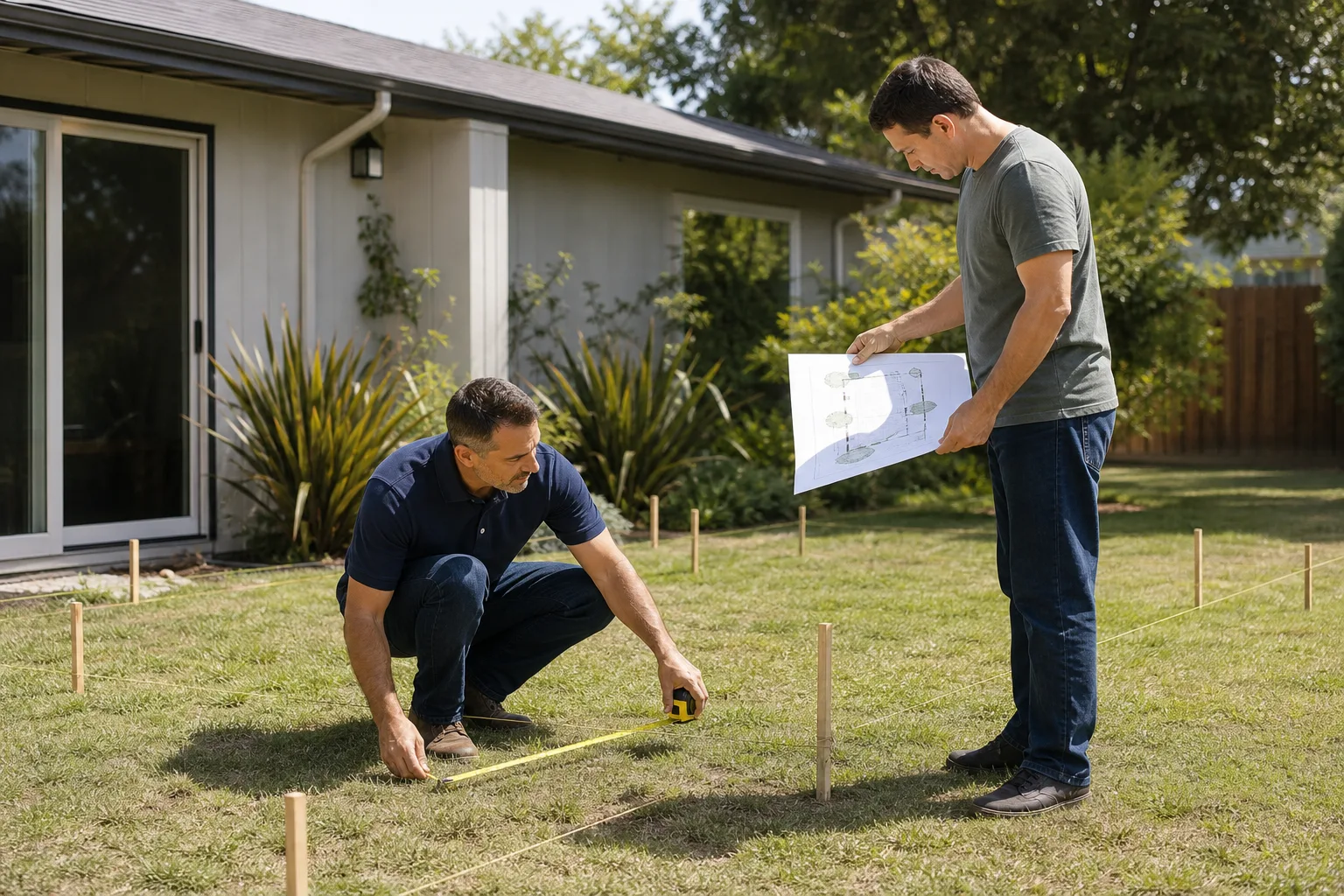
When you hire for a North Las Vegas ADU, you’re coordinating a permit set through plan review, scheduling utility work around existing service capacity, and sequencing inspections that a remodel never triggers (foundation, framing, sheathing, rough utilities, final). A contractor who has spent a decade doing interior remodels can be excellent at their trade and still be a poor fit, because the deliverable here is a documented, permitted, inspected dwelling, not a finished room.
This is why the generic advice fails. “Check references” tells you whether someone’s last client was happy. It doesn’t tell you whether that contractor has ever shepherded an ADU through plan review in North Las Vegas or whether they hold the right classification to pull the permit in the first place. We’ve watched homeowners spend months collecting bids from firms that were never positioned to finish the job. The fix is to hire on documents, not impressions.
Which Nevada License Your ADU Contractor Actually Needs
Nevada licenses contractors by classification, and getting this wrong is the single most expensive mistake in the hiring process. A new detached ADU is a general building project. That generally points to a Class B or B-2 general building contractor license, which covers construction of structures that require the coordinated effort of multiple trades. A garage conversion or junior ADU that stays within an existing shell may be handled under a narrower classification depending on the scope, but the moment you’re adding square footage, running new service, or touching structural elements, you want to confirm the license actually covers it.
The trap is the specialty sub-license. A firm may hold a valid license for one trade (electrical, plumbing, framing) and still not be licensed to contract the whole ADU. Subcontractors under a properly licensed general contractor are a normal and expected part of the build. A specialty-only firm acting as your prime on a new detached structure is not.
What to confirm before you sign
- Classification matches the scope. New detached ADU: confirm a general building classification, not a single-trade license.
- The license is active and in good standing. Expired, suspended, or lapsed licenses show up on the state lookup.
- The name on the contract matches the name on the license. Mismatches are a warning sign worth asking about directly.
- Who is listed as the qualifier. Nevada requires a qualifying party behind the license; a firm that can’t tell you who that is hasn’t done this before.
None of this is a reason to distrust a contractor. It’s a reason to ask, and to expect a calm, immediate answer. A studio that treats the permit set as the core product keeps this paperwork ready. You can see how that structure works on our ADU Design & Permitting in North Las Vegas page, where drawings and permits are handled under one contract.
How to Verify a Contractor on the NSCB Lookup Tool
The Nevada State Contractors Board maintains a public license lookup. It takes about three minutes and it separates a real firm from a website. Here’s the sequence we’d walk a neighbor through:
- Search by license number or business name on the NSCB lookup, using the exact name that appears on the written estimate you were handed.
- Confirm status is active and the expiration date is in the future, not the past.
- Check the classification against your scope (general building for a detached ADU, appropriate specialty coverage for a conversion).
- Look for complaints or disciplinary actions and read them, if any exist, rather than assuming the worst from a count.
- Cross-check the business name against the contract, the estimate, and the permit applicant name. All four should line up.
Do this for every firm you’re seriously considering, including the one you like. Verification isn’t suspicion; it’s the due diligence a six-figure decision earns. If a contractor hesitates to hand over a license number, that hesitation is your answer.
Five Contract Clauses That Separate an ADU Builder from a Remodeler
A remodeling contractor who added “ADU” to their website will usually produce a remodeling-style contract. That’s the tell. Read for these five provisions before you sign anything.
- Who holds the permit. The contract should name the party responsible for pulling the permit and state whether that’s the builder or the owner. Owner-pulled permits on a design-build project shift coordination risk onto you and blur who answers when an inspector flags something.
- Who owns plan revisions. Drawings almost always change during plan review. The contract must say, in writing, who absorbs the cost of revisions the builder’s own scope created versus revisions driven by your changed preferences.
- What triggers a change order. A legitimate contract lists the specific conditions that can increase price (a discovered mismatch vs. the permitted plans, an owner-requested change) and states that everything else is fixed. Under our Haven Standard Clause 1, the written price is locked before work starts, and Clause 5 (No Surprises) keeps the scope fixed at signing with no door-side upsells.
- A completion or warranty promise in writing. Look for a stated remedy if the finished unit doesn’t match the permitted drawings. Our 365-Day Done Right Promise commits to making it right, in writing, before the project begins.
- Itemized permit and utility costs. Permit fees and utility tie-ins should appear as their own line items, not folded into a lump sum where they can quietly grow.
If a proposal arrives without these clauses, it isn’t a contract problem. It’s a signal that you’re talking to a remodeler. Our Garage Conversion ADU in North Las Vegas page shows the same clause structure applied to a smaller-scope conversion.
The Design-Build Gap: Why Drawings-and-Bids Creates Liability
The conventional path is to hire a designer, get a permit set, then bid that set to three contractors. It sounds prudent. In practice it builds a gap the homeowner stands in the middle of.
When drawings come from one party and construction from another, the two can point at each other the moment something’s off. The builder says the plans were unclear or unbuildable; the designer says the builder misread them. Nobody owns the outcome, and you’re the one paying for the argument. That gap is the reason so many of our clients come to us already holding a set of plans, frustrated that the bid-to-finish process stalled.
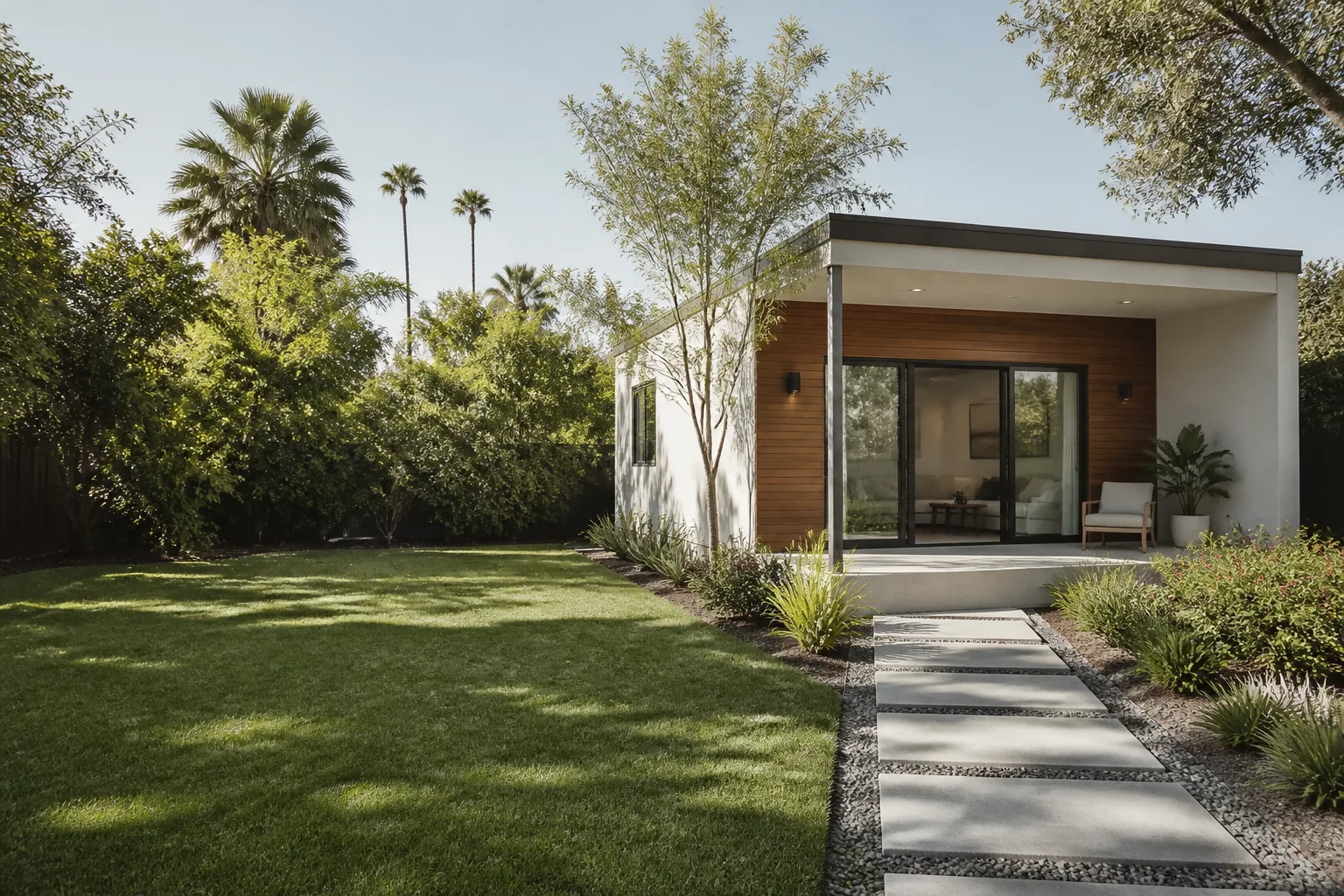
A single-contract design-build agreement looks different in one specific way: the drawings, the permit set, and the construction sit under one price, signed once. If the framed wall doesn’t match the permitted drawing, there’s no question about which party makes it right, because there’s only one party. That’s the structural advantage, and it’s why we specify and coordinate prefab and modular systems from makers like Dvele, Mighty Buildings, and Plant Prefab inside the same contract rather than handing a homeowner off to a third party mid-project. You can read how that mapping works for a full accessory structure on our New Detached ADU in North Las Vegas page.
You don’t have to choose design-build to hire well. But if you choose the drawings-and-bids path, build the blame-gap into your budget and your timeline, because it will show up in both.
The Right Questions for the First Call
Most homeowners open with “what do you charge?” It’s the wrong first question, because a number without a permit set behind it means nothing. Lead with proof instead. Here’s the sequence that gets you real information in ten minutes:
- “Can you show me your last permit set and the final certificate of occupancy from that same project?” The pair together proves the drawings and the finished, inspected building belong to the same job.
- “What’s your license number and classification?” You’ll verify it on the NSCB lookup. A confident answer comes immediately.
- “Who pulls the permit, and who pays for plan revisions?” This tells you whether you’re dealing with a design-build studio or a builder who’s never owned a permit set.
- “What’s a written price range for a project like mine, and what would move it?” Notice we said range tied to specifics, not a firm number conjured before a site visit.
- “How do you document what you find on site?” Ask what evidence you’ll receive. A documented photo record on every visit tells you far more than a summary of how things went.
- “What happens if the finished ADU doesn’t match the permitted drawings?” Listen for a written remedy, not a reassurance.
Get the answers in writing. The first call reveals the contractor; the written follow-up reveals whether their claims survive daylight.
North Las Vegas Red Flags
Every market has its own failure pattern. These are the ones that come up most often when ADU buyers get burned in North Las Vegas.
- A firm number quoted before any site visit. A $150,000 quote delivered over the phone before anyone has seen your lot, alley access, or existing service panel is fiction. It will change.
- Bids that don’t itemize permit fees. A single lump sum hides plan-review fees, inspection costs, and utility tie-ins. When they surface later, they land on you.
- Timelines that ignore the city’s review backlog. Plan review in a busy metro doesn’t run on a fixed clock. A schedule that promises a specific finish date without accounting for current review times is a schedule built to slip.
- The specialty-only prime. A single-trade firm acting as general contractor on a new detached structure, without a general building classification.
- No referral to a past certificate of occupancy. A contractor who can’t show you a completed, inspected ADU from a North Las Vegas project is asking you to fund their first one.
- Price that changes with no documented reason. A line item that grows should trace to a specific, written cause, not a vague “conditions.”
The pattern underneath all six is the same: a firm treating your ADU like a bigger remodel. Catch it early, before the price starts to move.
What North Las Vegas Climate and Code Mean for Your Build
North Las Vegas is not a neutral climate for a dwelling unit. Summers routinely push past 110°F, and an ADU that shares a wall with an unconditioned garage in a garage conversion inherits heat gain that a detached new build doesn’t. That drives real line items: insulation of the shared wall, ventilation for the habitable space, and the size of the cooling system. A bid that treats those as afterthoughts is a bid that will underperform in July.
Then there’s the permitting and utility layer. Electrical service capacity has to be checked against what the panel can support once a second unit draws power; water and sewer tie-ins have to be coordinated through the city, not assumed. In our experience, the ADU buyers who get pinned on cost are almost always the ones whose contractor waved those two items aside during the estimate. When we walk a North Las Vegas site, we itemize the service and tie-in work separately, so you see it before you sign rather than after framing.
None of this is unique to a single neighborhood. It applies whether you’re infilling near the older grid or building closer to the newer development corridors, because the review and the services come from the same city. What changes is the specific site: lot access, slab condition, and where the existing service sits. Those findings are exactly what belong in a documented photo record, and we put them there on every visit so you have evidence of what was found and what was done. Start at the Ellery ADU Studio North Las Vegas home page if you want to see the full range of what the studio handles.
Common Mistakes to Avoid
- Bidding on drawings you own before choosing a builder. Hiring a designer and then asking three contractors to bid the set invites the blame-gap. You’ll spend more reconciling the plans than a single contract would have cost.
- Treating a low number as the real number. The lowest bid is often the least complete one. Compare line items, not totals.
- Skipping the NSCB check. It takes three minutes and it has stopped real disasters.
- Accepting “we’ll figure out the permit later.” Permits drive the timeline, the inspections, and the cost. A builder who defers them is deferring your certainty.
- Signing without a written remedy clause. A promise to “make it right” means nothing if it isn’t in the contract. Get it on paper, like our 365-Day Done Right Promise, before work begins.
- Not asking for a second opinion. If you’re holding a written estimate and something feels off, a free second opinion from a design-build studio will tell you what it would charge to do the same scope.
When to Call a Professional
Hiring an ADU contractor isn’t a decision you have to make alone, but it is a decision you should make with documents. Call a professional when you’re holding two bids and want a third opinion on whether either is complete, when you’ve bought a plan set and the construction side hasn’t materialized, when a bid came in suspiciously low or suspiciously fast, or when you’re ready to price a specific scope – conversion, detached, or junior unit – and want a written number tied to a permit set before you commit. If you’re already holding a written estimate from another firm, our free second opinion compares it scope for scope at no cost.
Ellery ADU Studio North Las Vegas offers free estimates in North Las Vegas – call (866) 403-8955 and a live person will answer, day or night. We hold and pull permits, lock a written price under Haven Clause 1 before any work starts, and back every project with the 365-Day Done Right Promise in writing. Our background-checked, uniformed crews carry their license number on this page, and every visit comes with a documented photo record you keep.
Frequently Asked Questions
A garage conversion ADU in North Las Vegas typically runs in a lower all-in band than a new detached build, with a detached ADU priced at the higher end once foundation, utilities, and full structure are included. The only way to get a real number is against a specific permit set, and that’s why every project here is quoted in writing before work begins. Call (866) 403-8955 for a free estimate – estimates are free, and the number is yours before anything starts.
For a new detached ADU, yes: you’ll want a firm holding a general building classification, not a single-trade specialty license acting as your prime. Conversions may be handled under narrower coverage depending on scope, but the moment you add structure or new service you want a general contractor in the seat. Verify the classification on the NSCB lookup before you sign, and call (866) 403-8955 if you want a second opinion on a license or a bid.
Design-build puts the drawings, the permit set, and the construction under one contract at one written price. Hiring them separately leaves a gap where the designer and the builder can each blame the other, and you carry the cost of that gap. A single contract closes it. Call (866) 403-8955 for a free estimate so you can compare the two structures side by side.
Plan review time in North Las Vegas depends on the current review backlog and how complete the permit set is on submission, so a responsible firm quotes a range rather than a promise. A builder who gives you a fixed finish date before plan review has even started is guessing. Call (866) 403-8955 and we’ll tell you what we’re seeing on review times right now.
Under a properly written contract, the written price is locked at signing, and only owner-requested changes or a documented mismatch against the permitted plans can move it. Everything else stays fixed – that’s Haven Clause 5, No Surprises. If a bid you’re holding doesn’t say this, ask why. Call (866) 403-8955 for a free second opinion on that estimate.
The contract should commit, in writing, to making it right, and that commitment should be on the page before work starts. Ours is the 365-Day Done Right Promise: if the finished ADU isn’t built to the permitted drawings, we make it right. Ask any contractor to show you that clause in writing before you sign, and call (866) 403-8955 if you’d like to see how ours reads.
The Bottom Line
Hiring an ADU contractor in North Las Vegas is a documents decision, not a vibe decision. Verify the license classification on the NSCB lookup. Demand a permit set and a matching certificate of occupancy from a past project. Read the five clauses: who holds the permit, who owns plan revisions, what triggers a change order, what the written remedy is, and how permits and utilities are itemized. Understand that drawings-and-bids leaves a gap between designer and builder, and a single-contract design-build structure closes it at one written price. Get your own site walked before anyone quotes you a firm number. Do those things and you’ll hire on evidence, not on hope, and the price you sign will be the price you pay.
Ellery ADU Studio North Las Vegas has specified and built ADUs under one contract at one written price, with a documented photo record and a written warranty on every project. Our technicians have up to 11 years of experience, we’re licensed and insured, and a live person answers (866) 403-8955 around the clock. Call for a free estimate, or send us any written estimate you already have for a free second opinion and a scope-by-scope comparison.
Written by the team at Ellery ADU Studio North Las Vegas.