Last updated November 18, 2026
DIY vs Professional ADU Site Prep & Utilities: What’s Safe to Do Yourself
Here’s the part almost nobody explains before you rent an excavator: a North Las Vegas homeowner who digs their own utility trench has completed roughly 15% of the site prep task – the slice that requires no license at all. The other 85%, which includes conduit installation, service connections, inspection scheduling, and compaction testing, requires licensed trades and third-party sign-off no matter who swings the shovel. Digging looks like the work. It isn’t. This guide draws the legal line for North Las Vegas lot owners: what you can do yourself, what Clark County and the utility authorities won’t let you touch, and the specific ways a DIY trench can fail a final inspection and cost you more than hiring a pro would have.
Quick Answer
In North Las Vegas, you can legally clear vegetation, remove trees (with city approval where required), and do minor grading under Clark County’s grading permit threshold yourself. Everything that connects to a public utility – trench work, conduit, water and sewer service, electrical service – requires a licensed C-2 or C-1 contractor and an inspection by the utility authority. Backfilled trenches also need a passing compaction test before a slab can be poured, and a DIY trench that fails compaction means re-excavation at added cost.
Table of Contents
- Where North Las Vegas Draws the Legal Line
- What You Can Legally Do Yourself Without a License
- What Requires a Licensed C-2 or C-1 Contractor in Nevada
- NV Energy’s 36-Inch Rule: A Utility Requirement, Not Just a Code
- The Compaction Testing Requirement That Trips Up DIY Builds
- How DIY Site Work Affects Insurance and Warranty Coverage
- Common Mistakes to Avoid
- When to Call a Professional
Where North Las Vegas Draws the Legal Line
The line between DIY and licensed work isn’t about skill. It’s about liability, and in North Las Vegas the line is drawn by the Nevada State Contractors Board and the utility authorities, not by your confidence. A homeowner can pull an owner-builder permit for some scopes of work on their own property. That’s different from doing utility work, which touches public infrastructure and carries its own licensing rules. When we look at a North Las Vegas lot that’s been partially prepped by the owner, the first thing we do is check what permits were pulled and what inspections were recorded. Unpermitted work has to be disclosed, and it complicates the permit set you’ll eventually submit for the ADU itself.
North Las Vegas lots vary widely in soil conditions. Lots near the Las Vegas Wash and older neighborhoods like Highland Hills often have caliche layers that change how deep a trench has to go and how much spoil you’ll generate. Reach the wrong depth because you misread the soil and you’ve created a grading problem the city will flag. Get it right and you’ve saved a few hundred dollars on excavation. That’s the honest tradeoff.
What You Can Legally Do Yourself Without a License
A few tasks on a North Las Vegas lot don’t require a contractor license. Here’s what you can do yourself, and what each one actually involves.
- Clear vegetation and debris. Pulling out shrubs, dead trees, old fencing, and construction debris from a North Las Vegas lot doesn’t require a license. It does require hauling the material off-site to a permitted facility; burning isn’t allowed inside city limits.
- Remove trees (with city approval where required). North Las Vegas has tree removal rules for certain protected species and for trees in the public right-of-way. Check with the city before you cut, and hire a licensed arborist for anything near power lines.
- Minor grading under Clark County’s threshold. Small regrading that stays under the grading permit threshold – which is a volume of soil moved, not a depth – can be done by an owner. Cross the threshold and you’re in permit territory, and you’ll need a grading plan prepared by a licensed civil engineer.
- Non-structural landscaping and site cleanup. Moving gravel, laying topsoil away from the future building footprint, and general site maintenance are fair game.
Notice what isn’t on this list: any connection to a public utility. Not one. For a wider look at how site prep fits into a full ADU build, our Ellery ADU Studio North Las Vegas home page lays out the full sequence.
What Requires a Licensed C-2 or C-1 Contractor in Nevada
Nevada licenses contractors by classification. C-2 covers general engineering and utility work; C-1 covers general building. Anything that connects to a public utility system falls under these classifications, and the state takes it seriously. Working without a license on work that requires one is a violation that can carry fines and an order to remove the work entirely.
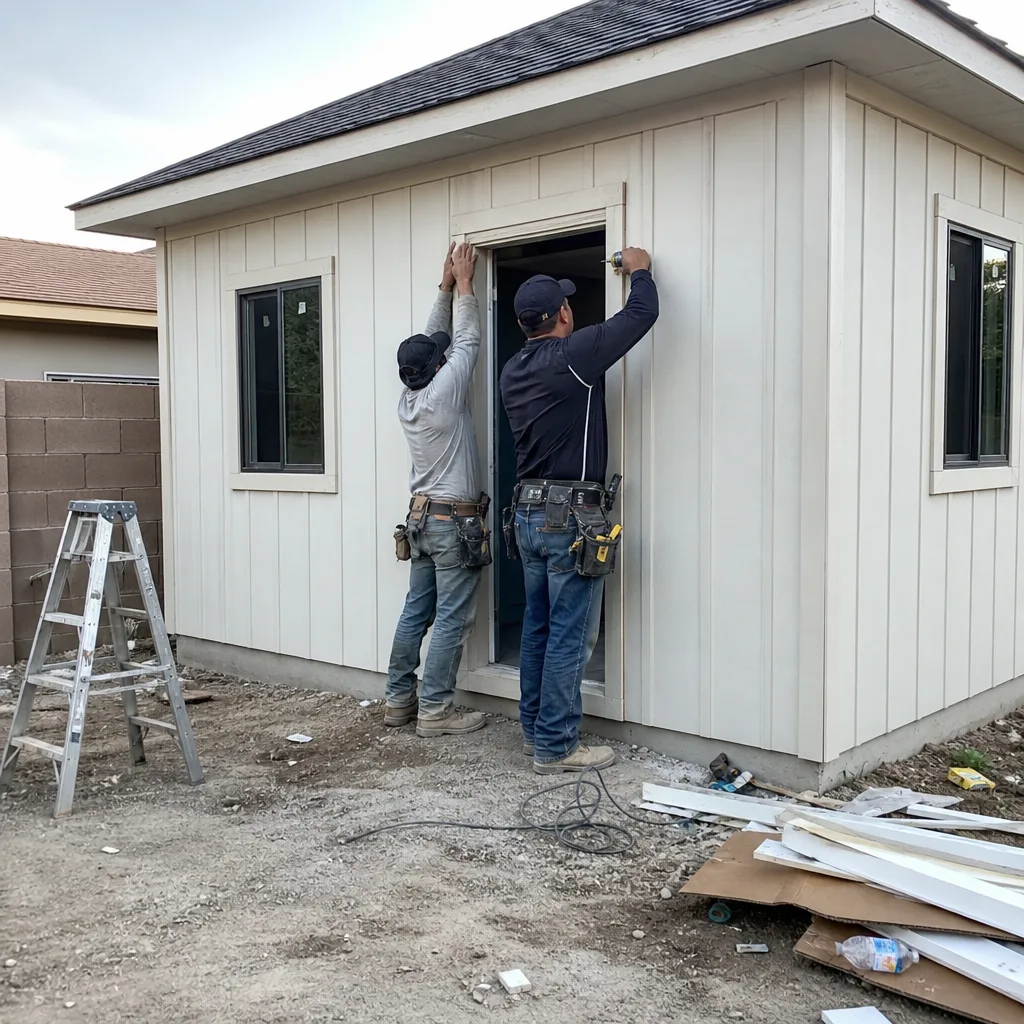
- Utility trench work that connects to a public system. Water, sewer, gas, electric, and communications all require a licensed contractor to install the trench, conduit, and connection. The utility authority inspects the connection before service is energized or activated.
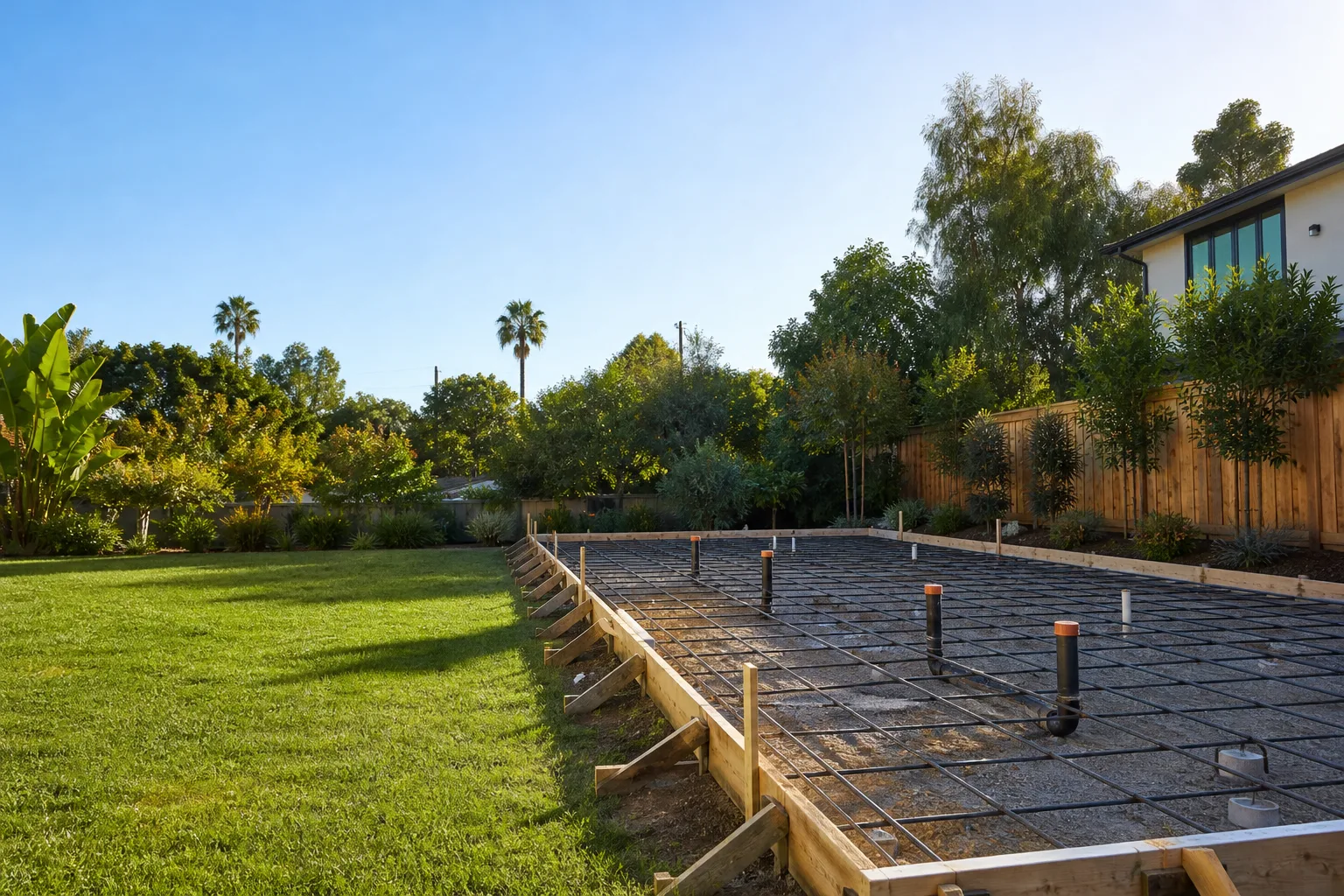
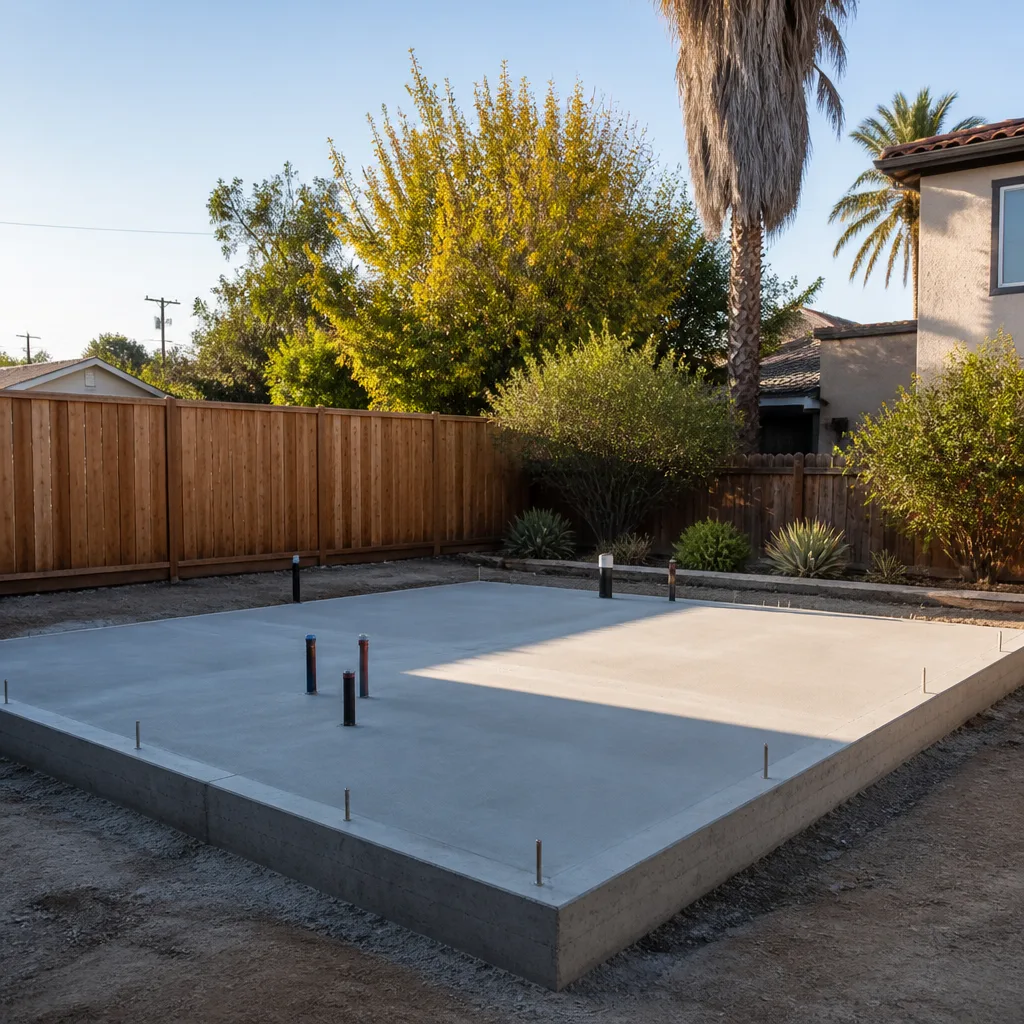
- Concrete flatwork above a certain scope. Small slabs and walkways often don’t trigger a contractor requirement, but structural flatwork – the slab your ADU sits on, driveways, and anything tied to the building permit – does.
- Retaining walls over 4 feet. A retaining wall taller than 4 feet needs an engineered design and a licensed contractor to build it. In North Las Vegas, where summer monsoons can dump an inch of rain in an hour, a failed retaining wall doesn’t just cost money; it can send water into your neighbor’s yard and put you in a liability dispute.
We regularly see North Las Vegas owners underestimate how much of this work falls on the licensed side. On a typical detached ADU, utility connections and concrete account for a large share of the site prep line item. That’s not a reason to avoid the project. It’s a reason to understand the scope before you start. Our New Detached ADU in North Las Vegas page walks through the full sequence from permit to final inspection.
NV Energy’s 36-Inch Rule: A Utility Requirement, Not Just a Code
This one catches almost every DIY-inclined owner. NV Energy prohibits any non-NV Energy personnel from working within 36 inches of a service entrance. That’s a utility rule, not just a code rule. It applies to the electrical service drop, the meter, and the connection point on your ADU. You can’t dig a trench and install conduit up to the meter yourself, even if you’ve done it before and even if the trench is already open. The utility will not connect the service if the installation wasn’t performed by licensed personnel.
In our experience, North Las Vegas owners who run their own trench to save money often hit this wall late: the trench is dug, the conduit is in, and the utility inspection fails because the connection wasn’t done by a licensed contractor. The fix is to re-expose the work, hire a licensed electrician, and re-inspect. That’s re-excavation cost on top of the electrician’s bill. NV Energy’s rule exists for a reason – the service entrance is where the highest amperage in the system meets your building – and treating it as a code technicality rather than a hard requirement is how a cheap trench becomes an expensive one.
The Compaction Testing Requirement That Trips Up DIY Builds
Clark County requires a compaction test report on backfilled utility trenches before a slab can be poured. This is the requirement that quietly ends DIY site prep for a lot of owners. Here’s why: compaction isn’t about how hard you tamp the dirt. It’s about achieving a specified density, verified by a geotechnical testing firm using a nuclear density gauge or similar instrument. The report is a signed document that goes into the permit file.
- Backfill in lifts. Trenches have to be backfilled in layers of a set depth, each layer compacted before the next goes in. Skip a lift or use the wrong lift depth and the test fails.
- Moisture matters. North Las Vegas soils – especially the clay-heavy pockets in older neighborhoods – compact very differently dry than at optimum moisture. In summer, a trench that sits open for a day can dry out past the point where it will compact at all without re-wetting.
- The test is third-party. A licensed geotechnical firm has to test the backfill, not the contractor who did the work. That firm signs the report.
- A failed test means re-excavation. If the test fails, the trench gets re-opened, re-backfilled, and re-tested. The cost is entirely on the owner.
We’ve seen North Las Vegas builds stall for a week or more because the compaction report came back failing on a trench the owner backfilled over a weekend. The report isn’t optional and it isn’t a formality. It has to pass before the slab pour, which means it’s on the critical path.
How DIY Site Work Affects Insurance and Warranty Coverage
This is the part that doesn’t show up in the permit file. It shows up in the claims department. A homeowner’s insurance policy typically excludes damage resulting from work that wasn’t permitted or done by a licensed contractor. If your DIY trench causes a water line to fail and flood your house, or if an improperly graded lot sends runoff into a neighbor’s foundation, the claim can be denied. The policy language is specific: unpermitted or improperly performed work is an exclusion, and the burden of proving the work was done correctly falls on the owner.
The warranty implications matter just as much. A design-build contractor’s foundation warranty generally assumes the site work beneath the slab was done to specification. If a homeowner did their own backfill and it later settles, the foundation warranty won’t cover the resulting movement. The contractor can’t warrant work they didn’t do and can’t verify. That’s not a policy designed to trap owners. It’s the only defensible position for the contractor, because the foundation can only be as good as the soil under it.
We handle site prep under the same single contract as the drawings and construction, which means the compaction report, the utility connections, and the foundation warranty are all one chain of responsibility. If something’s wrong, there’s nobody to point at. Under the Haven Standard, that chain is written down before work starts.
Common Mistakes to Avoid
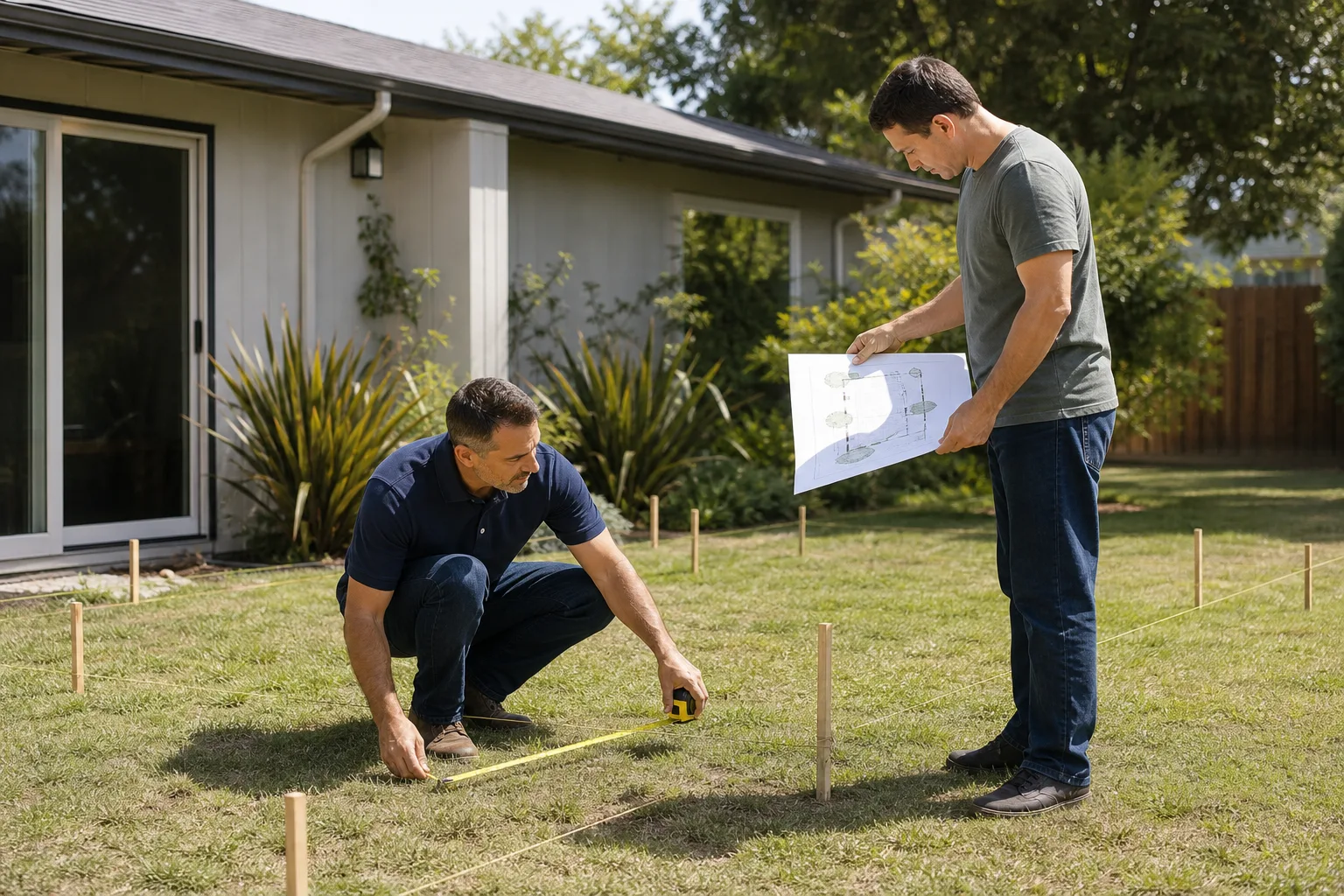
- Digging a trench before the permit set is final. Trench alignment has to match the drawings. A trench dug to the wrong location, even a good trench, gets re-dug. We’ve had North Las Vegas clients arrive with a trench that had to be relocated because the ADU footprint moved.
- Assuming “under the threshold” means “no permit.” Minor grading still has to comply with drainage requirements. Water that flows onto a neighbor’s property because of a grading change is a complaint waiting to happen, and the city can require you to correct it at your cost.
- Backfilling without a compaction plan. Failing compaction is the most common DIY site prep failure we see. It’s rarely about effort. It’s about lift depth, moisture, and whether the test was scheduled before the backfill went in.
- Treating the NV Energy 36-inch rule as a suggestion. The utility will not energize a service connection installed by unlicensed personnel. No exceptions, no inspection appeal that works.
- Removing a tree without checking the city’s protected tree list. North Las Vegas has removal rules for certain species, and a tree of a protected species removed without approval can cost more in fines than the tree was worth.
- Skipping the photo record. If you do legal site work yourself, photograph every stage: cleared vegetation, grading elevations, trench placement, backfill lifts. When a question comes up later, photos answer it faster than memory.
- Assuming DIY will save money on a North Las Vegas build. Once you add re-excavation risk, compaction re-testing, and the possibility of a denied insurance claim, the savings from legal DIY tasks are real but modest. The expensive mistakes happen in the licensed scopes where DIY was never allowed.
When to Call a Professional
Call a licensed professional the moment your project touches a utility connection, a slab, a retaining wall over 4 feet, or anything within 36 inches of a service entrance. Call before you dig the trench, not after. The right sequence is permit set first, then trench, then inspection, then compaction test, then slab. Any invert in that order costs more than doing it correctly the first time. If you’ve already started and you’re not sure where the line is, we can tell you in an hour. Ellery ADU Studio North Las Vegas offers free estimates in North Las Vegas – call (866) 403-8955.
Frequently Asked Questions
No. Utility trench work that connects to a public utility system requires a licensed C-2 or C-1 contractor in Nevada, and the utility authority inspects the connection before service. You can clear vegetation and do minor grading yourself, but the trench itself is licensed work. Call (866) 403-8955 for a free estimate on the licensed portion.
You can do minor grading that stays under Clark County’s grading permit threshold, which is measured by soil volume moved, not depth. Anything above the threshold requires a grading plan prepared by a licensed civil engineer. Call (866) 403-8955 and we’ll tell you where your project falls against the threshold.
Clark County requires a compaction test report on backfilled utility trenches before a slab can be poured, because the foundation can only be as stable as the soil under it. A failed test means re-excavation and re-testing at the owner’s cost. Estimates on site prep are free – call (866) 403-8955.
It can. Homeowner’s policies typically exclude damage resulting from work that wasn’t permitted or done by a licensed contractor, and the burden of proving the work was performed correctly falls on the owner. Before you start, verify what your policy covers. Call (866) 403-8955 for a free second opinion on a written estimate you already have.
You can save on legal tasks like clearing and minor landscaping, but the savings get eaten quickly by re-excavation and re-testing if a licensed scope gets done wrong. On a typical North Las Vegas ADU, the real savings come from a written price that’s locked before work starts, not from DIY. Call (866) 403-8955 for a written quote.
Site prep on a typical North Las Vegas ADU runs several weeks from clearing through compaction testing and slab prep, and utility inspection scheduling is often the pacing item. Weather and utility availability both affect the timeline. Call (866) 403-8955 for a project-specific schedule.
The Bottom Line
The DIY calculus on ADU site prep is narrower than most owners expect. You can legally clear vegetation, remove trees with city approval, and do minor grading under Clark County’s threshold. Everything that connects to a public utility – trench, conduit, service, water, sewer – requires a licensed C-2 or C-1 contractor, and NV Energy’s 36-inch rule means even a perfectly dug trench can’t be finished by an owner. The compaction test is the quiet gatekeeper: fail it and you re-excavate. Add the insurance and warranty risk and the honest answer is that DIY saves a few thousand dollars on the legal scopes and risks tens of thousands on the illegal ones. For broader context on what we handle under one contract, see ADU Design & Permitting in North Las Vegas and Garage Conversion ADU in North Las Vegas. We design, permit, and build 900+ ADUs from drawings through final inspection – every one with a written price before work starts. Whether you’re weighing a prefab from Cover or Dvele or a site-built structure, the connection and inspection requirements are the same.
Ready to stop digging and start with a written price? Call (866) 403-8955 to schedule your free estimate. A live person answers 24/7 – no voicemail queue, no callback that doesn’t materialize. Every project is governed by the Haven Standard: a written price before work starts, a documented photo record on every visit, and a 365-Day Done Right Promise backed in writing.
Written by the team at Ellery ADU Studio North Las Vegas.